911FINDER
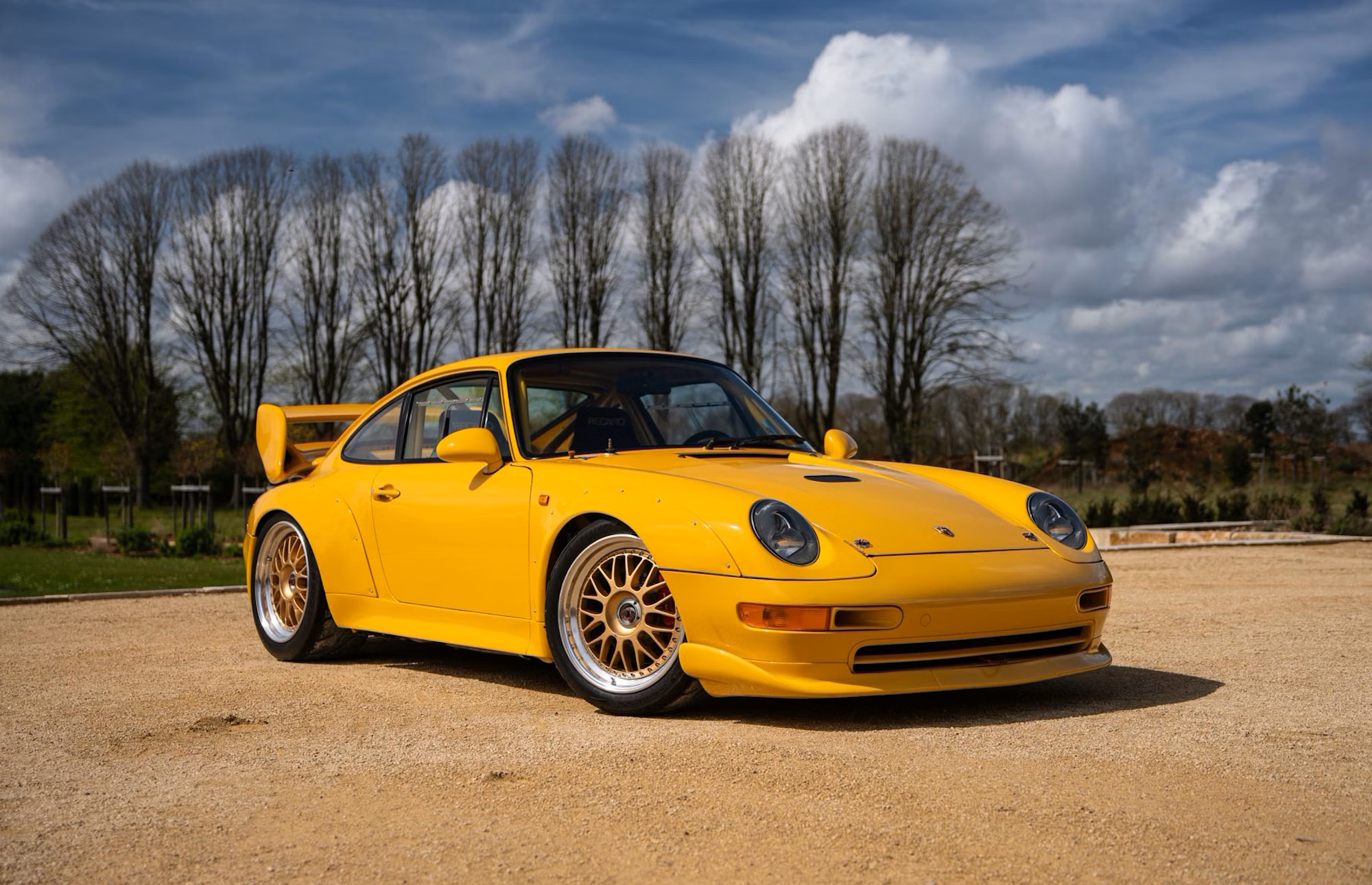
Porsche 993 Cup racing car

Home/Buyer's Guides/993 racing cars, Cup & RSR

Pure motorsport · 1994-1998

Porsche 993 racing cars buyer’s guide, Cup & RSR

The last air-cooled warriors: originality, history, hours run, rebuilds, parts supply, costs and a realistic view of market value.

Overview Detailed analysis Running costs Market prices Conclusion & recommendation
The last air-cooled warriors

Cup and RSR: motorsport history you can buy

The 993-generation Porsche 911 marks not only the end of the air-cooled era for Zuffenhausen’s legendary sports car but also a high point in motorsport. The versions developed specifically for racing, the Cup (3.8) and the extremely rare Cup 3.8 RSR, are sought-after collector cars today and compelling witnesses to the motorsport of the 1990s.

These 993 racing cars shared the basic concept of the road models but were optimised throughout for competition. With uprated engines, bespoke suspension settings and aerodynamic changes, they were built for professional racing. This guide gives a full overview of these exclusive cars, sets out what makes them special and offers practical advice on buying one.

Focal points of the inspection: A check of the racing history, FIA homologation, RSR authenticity (one of 45) and an analysis of what it costs to run.

315 PS

993 Cup 3.8 (from 1996)

216

993 Cups built (1994-1998)

350 PS

Cup 3.8 RSR (257 kW)
45

RSRs built (1997-1998)

The racing cars at a glance

One-make series car against GT racer

The technical differences between the one-make series car and the GT racer.

Overview

ModelBuiltProductionPowerWhere it raced
993 Cup (3.8 Cup)1994-1998216 built (147 with 310 PS, 69 with 315 PS)310-315 PSPorsche Supercup / Carrera Cup
993 Cup 3.8 RSR1997-199845 built (30 from 1997, 15 from 1998)350 PS (257 kW)The GT3 class (today GT2)

Technical differences: Cup against RSR

Component993 Cup (3.8 Cup)993 Cup 3.8 RSR
Engine output310-315 PS350 PS
ValvetrainStandard, with sports camshaftsLarger valves, more aggressive camshafts
Compression ratioapprox. 10.5:1approx. 11.5:1
TransmissionStrengthened six-speed manual (H-pattern)A dedicated racing gearbox with improved cooling
SuspensionAdjustable, competition-orientedFully adjustable, with high-grade components (spherical bearings)
AerodynamicsA sports rear wing and moderate changesMore aggressive aerodynamics and more downforce (the RSR wing)
Weightapprox. 1,150 kgapprox. 1,050-1,100 kg
Tyres18-inch racing tyresSpecial 18-inch racing tyres, wider
InteriorMinimal, with a single racing seatExtreme weight saving, with additional instruments
The full body of expertise

Detailed analysis: engineering and history

Here you will find the full detail on the cars, their servicing and where they can be raced.

1. Porsche 993 Cup (3.8 Cup): the one-make series racer +

Background and development: The 993 Cup was developed specifically for the Porsche Supercup and the national Carrera Cup series. Based on the production 993 Carrera but extensively modified for racing, it was the direct continuation of the successful Cup series. Introduced in 1994, it competed from the outset with the 3.8-litre engine that gave it the "3.8 Cup" name; 216 were built between 1994 and 1998.

Technical specification:

  • Engine: 3.8-litre air-cooled flat-six, 310-315 PS at 6,900 rpm, roughly 360 Nm. Revised engine management, dedicated racing camshafts, metal catalytic converters and a sports exhaust
  • Transmission: a strengthened six-speed manual, a strengthened clutch, a limited-slip differential with a fixed locking rate and shorter gearing
  • Suspension and brakes: stiffer steel springs, adjustable racing dampers, 40-50 mm lower, wider track, and spherical joints in place of rubber. Racing brakes, and no ABS from 1995
  • Body: lightweight (aluminium and plastic), a fixed rear wing, roughly 1,150 kg (300 kg lighter than the production car)
  • Safety: a welded FIA roll cage, six-point harness, fire suppression, a racing seat and an external battery cut-off

How it evolved:

  • 1994: the debut, with the 3.8-litre engine (310 PS)
  • 1995: ABS dropped
  • 1996: up to 315 PS, with revised aerodynamics
  • 1997/1998: the final stages, with refinements in detail
Racing history: The racing history matters. A Cup with a documented, successful record can be worth more than one that was barely raced.
2. Porsche 993 Cup 3.8 RSR: the rarity +

The RSR is the most exclusive variant, at only 45 cars (30 from 1997, 15 from 1998). Developed for the GT3 class (today GT2), it bridged the gap to the GT1.

The exclusive specification:

  • Engine: 3.8-litre flat-six, 350 PS at 7,200 rpm, 380 Nm. Individual throttle bodies, more aggressive camshafts, modified cylinder heads, a revised airbox and a titanium exhaust
  • Drivetrain: a strengthened six-speed racing gearbox, a multi-plate racing clutch, an adjustable limited-slip differential and a gearbox oil cooler
  • Suspension: fully adjustable, with spherical bearings, stiffer anti-roll bars, floating brake discs and magnesium racing wheels
  • Body: strengthened sills, carbon-fibre components front and rear, wider wings and a dedicated aerodynamic wing. Weight: 1,050-1,100 kg
A warning on authenticity: There are "RSR replicas" built on Cup cars. Checking the chassis number (the RSR prefix) and the factory history through Porsche Classic is essential.
3. Racing technology and motorsport components +

These cars use specialist parts that set them far apart from the production models:

  • Cooling: larger oil coolers for engine and gearbox, improved ducting and additional openings at the front
  • Electronics: lightweight motorsport looms, simplified wiring, a racing ECU and data logging
  • Suspension: racing dampers adjustable for bump and rebound, height-adjustable spring platforms and stiff engine mounts
4. Racing then and now +

History: Cup: the Porsche Supercup (supporting Formula One) and the Carrera Cup series. RSR: Le Mans, Daytona, Sebring and the BPR Global GT Series. RSRs were often run by works teams.

Where they race today (historic racing): Popular in series such as the Porsche Classics Cup, Masters Endurance Legends and Le Mans Classic.

What is required today:

  • A current FIA roll cage and seat
  • Harnesses and fire suppression within date
  • An FIA HTP (Historic Technical Passport)
  • A choice to make: authenticity (original condition) against competitiveness (modifications)
5. Servicing, parts and specialist knowledge +

The servicing demands are heavy, and specialist knowledge is essential.

Intervals (as a guide):

  • After every outing: a basic inspection
  • Every 10 hours: an oil change
  • Every 20 hours: check the valve clearances
  • Every 50 hours: overhaul the brakes and suspension
  • Every 100 hours: rebuild the gearbox
  • Every 150-200 hours: rebuild the engine

Parts: Porsche Motorsport, Porsche Classic or specialist teams. Parts supply is difficult and expensive.

6. Buying advice: what to look for +

Identity and authenticity:

  • Have the chassis number checked with Porsche
  • Document the racing history in full (the logbook)
  • Be careful with the RSR: only 45 were built

Technical check:

  • Engine and gearbox: how many hours since the last rebuild?
  • Any accident damage to the body?
  • Is the safety equipment within FIA date?
Recommendation: Buy a car with an unbroken history and documented results rather than a perfectly restored one with no history at all.
The 993 Cup & RSR model bible

The complete knowledge: the Investor Dossier & Technical Compendium, in German

Concentrated expertise on the 993 Cup and RSR racing cars: weak points in detail, inspection checklists, production figures, what adds value and price forecasts.

€97

incl. VAT

To the compendium (German)
Estimates based on experience, as at 2025

Running and maintenance costs

Racing is expensive. These figures are based on experience, as at 2025.

Maintenance items and intervals

Maintenance itemIntervalApprox. cost (€)
Standard race inspectionAfter every outing1,000 - 2,000
Engine oil change (racing oil)Every 10 racing hours500 - 800
Brake pads (set)1-2 race weekends800 - 1,200
Brake discs (set)3-5 race weekends2,000 - 3,500
Clutch overhaulapprox. 30-40 racing hours3,000 - 5,000
Gearbox rebuildapprox. 100 racing hours8,000 - 15,000
Engine rebuild150-200 racing hours25,000 - 40,000
Safety equipmentEvery 5 years5,000 - 10,000
Racing tyres (slicks)1-2 race weekends1,500 - 2,500
Annual basic maintenanceWithout racing3,000 - 5,000
Market prices and investment, as at 2025

Market prices & investment

Based on auction data to 2025.

ModelPrice range (EUR)What drives it
993 Cup (3.8 Cup), standard180,000 - 250,000Year, documentation, mechanical condition
993 Cup with a notable history250,000 - 350,000Results, notable former owners
993 Cup 3.8 RSR (original)700,000 - 1,200,000+Condition, originality, racing history
993 Cup 3.8 RSR (significant history)1,000,000 - 2,000,000+Le Mans, wins in major races

Estimated ranges, as at 2025. Documented sales from Oct. 2025 to June 2026 (MarqueScope SOLD archive): three 993 3.8 Cups at €299,993 to €434,173, and one Cup 3.8 RSR (first registered 1998) at €700,000. Full detail in the 993 Carrera price report.

The strengths

  • The close of the air-cooled era in motorsport, and compelling witnesses to the 1990s
  • Small numbers: 216 Cups and only 45 RSRs
  • The Cup: an ideal way into historic racing at manageable cost
  • Popular in series such as the Porsche Classics Cup, Masters Endurance Legends and Le Mans Classic
  • The RSR: one of the most exclusive Porsche racing cars of all

The challenges

  • Heavy servicing demands, and specialist knowledge is essential
  • Parts supply is difficult and expensive
  • An engine rebuild every 150-200 racing hours (€25,000-40,000)
  • "RSR replicas" built on Cup cars are out there: check the chassis number and the factory history
  • The FIA safety equipment has to be kept in date

Conclusion and recommendation from 911Finder

The 993 racing cars mark the close of the air-cooled era in motorsport. The 993 Cup is the ideal way into historic racing (the Porsche Classics Cup, for instance) at manageable cost. The RSR is an investment of the highest order. At only 45 cars it is one of the most exclusive Porsche racing cars of all, and here nothing counts but unbroken provenance.

The next step

Buy this 911 with confidence, with 911Finder.

Do you already own a 911 from this model series? The Vehicle Documentation & Market Valuation puts the history, the paperwork and the market value of your car in order (€249 incl. VAT). Still looking? Then the right route is the Sourcing Enquire and name the model: Request a Digital Audit for a car from this model series.