MK1 GT2
2001-2003 · 462 PS · 963 built
- Engine: 3.6-litre twin-turbo (Mezger)
- Power: 462 PS, 620 Nm
- 0-100 km/h: 4.1 seconds
- Top speed: 315 km/h
Home/Buyer's Guides/996 GT2
The Widowmaker · 2001-2006Twin-turbo power and rear-wheel drive with no driver aids: prices, typical faults, inspection checklist and buying strategy, so you can assess the history and the engineering reliably on site.
✓ Rear-wheel drive only ✓ 1,300 built worldwide ✓ Mezger twin-turbo ✓ No driver aids
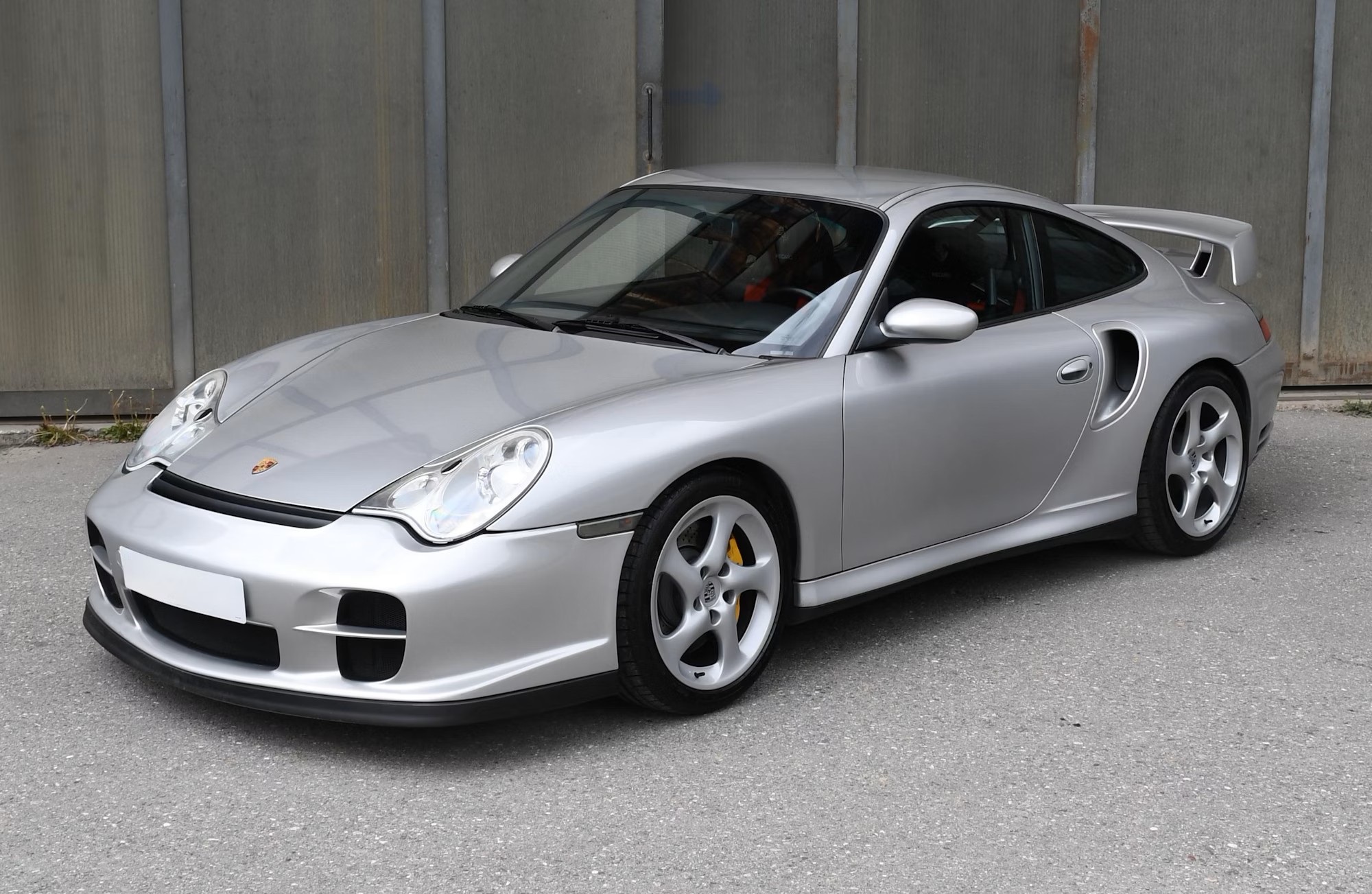
The Porsche 996 GT2 represents the most extreme expression of the first water-cooled 911 generation. As the road version of the GT2 race car, it embodies the perfect symbiosis of uncompromising performance and a pure driving machine. With its unique combination of twin-turbo power and rear-wheel drive Porsche created a sports car that challenges even experienced drivers. It carries its unofficial nickname for a reason: the Widowmaker.
As the direct successor to the 993 GT2, the 996 GT2 was first shown in 2001. Unlike the 996 Turbo (all-wheel drive), Porsche deliberately chose rear-wheel drive for the GT2 to save weight. In all, only around 1,300 carswere built, which makes it one of the rarest and most coveted models.
cars worldwide
MK2, Mezger twin-turbo, 640 Nm
Top speed, MK2
Rear-wheel drive only, no driver aids
2001-2003 · 462 PS · 963 built
2004-2005 · 483 PS · around 324 built
| Area | MK1 GT2 (2001-2003) | MK2 GT2 (2004-2005) |
|---|---|---|
| Engine | 3.6-litre twin-turbo, 462 PS | 3.6-litre twin-turbo, 483 PS, optimised engine management |
| Headlights | The "fried egg" design | A revised design with clear lenses |
| Interior | The classic 996 design | A slightly revised design, new materials |
| Wheels | 18-inch GT2 design | Usually 19-inch, an updated design |
| Engine management | Motronic 7.8 | Improved engine management, optimised maps |
| Brakes | Steel brakes (standard), PCCB optional | A further developed PCCB option (better durability) |
| Suspension | Sports suspension, a firm set-up | Improved dampers, an optimised set-up |
| Rear | The classic rear lights | Revised rear lights, a slightly modified apron |
On the used market, MK2 cars tend to be valued a little higher (more power, more modern looks). That said, the MK1 cars have their admirers too, particularly among purists.
The Mezger engine is the heart of the car. Here is everything about it.
The heart of the 996 GT2 is the 3.6-litre twin-turbo flat six named after its designer, Hans Mezger. Unlike the naturally aspirated engines of the standard 996 Carrera models, the Mezger engine is based on the proven racing engine of the Le Mans-winning 911 GT1.
What is particular to the GT2:
The GT2 is regarded as robust, but at this level of performance there is wear.
Engine:
Body and accident damage:
The GT2 sits around 20 mm lower than the Turbo. It has a specifically tuned sports suspension with uniball joints (in places) and strengthened mounting points.
250 to 600 pages of expert knowledge (depending on the edition) as a model-specific basis for your decision on the 996 GT2: detailed weak points, engine codes, specification details, inspection checklists, production figures, value-enhancing options and price forecasts.
Running a GT2 is costly and should be budgeted for realistically.
| Item | Estimated cost (€) | Interval / note |
|---|---|---|
| Minor service | 1,000 - 1,500 | annually / every 10,000 km |
| Major service | 2,500 - 3,500 | Every 30,000 km |
| Brake pads, complete | 1,200 - 1,800 | depending on how it is driven (around 20,000 km) |
| Brake discs, complete (steel) | 2,500 - 3,500 | depending on how it is driven (around 60,000 km) |
| PCCB brake discs (ceramic) | 15,000 - 20,000 | when damaged or cracked |
| Clutch replacement | 3,000 - 4,000 | around 50,000 - 70,000 km |
| Tyres, complete (19-inch) | 1,800 - 2,500 | depending on how it is driven (around 15,000-25,000 km) |
| Turbocharger overhaul (each) | 1,500 - 2,500 | when faulty or leaking |
| Dampers, complete | 3,000 - 4,500 | around 80,000 - 100,000 km |
| Insurance (fully comprehensive) | 2,000 - 4,000 | annually |
The GT2 is among the rarest Porsche models, with excellent potential.
| Year | Price level |
|---|---|
| 2010 | €80,000 - €110,000 |
| 2015 | €120,000 - €160,000 |
| 2020 | €170,000 - €240,000 |
| 2024/25 | €220,000 - €320,000 and more |
The greatest danger when buying a GT2 is accident damage that goes unnoticed: many cars have had accidents, and a thorough check for hidden damage is indispensable. Also look for a complete history and check the condition of the expensive PCCB brakes. The GT2 is a demanding car for experienced drivers, but it is among the rarest Porsche models, with excellent potential in value.
The listing, the paperwork and the price checked against real market data before you travel to view the car. A PDF dossier, usually within 24 h.
€199 incl. VAT · fixed price Assessment Level 2 · remoteDigital Audit plus follow-up questions, dealer answers, paperwork and a negotiating strategy, through to a clear buying decision.
€499 incl. VAT · audit included Assessment Level 3 · on siteA physical assessment where the car is: paint measurement, diagnostic readout, technical check, test drive and a negotiation brief.
from €790 incl. VAT · plus travelAlready own a Porsche 996 GT2? The Vehicle Documentation & Market Valuation puts the history, the paperwork and the market value of your car in order (€249 incl. VAT). Still looking? Then the right route is the Sourcing Enquire and name the model: Request a Digital Audit for a Porsche 996 GT2.