911 Turbo
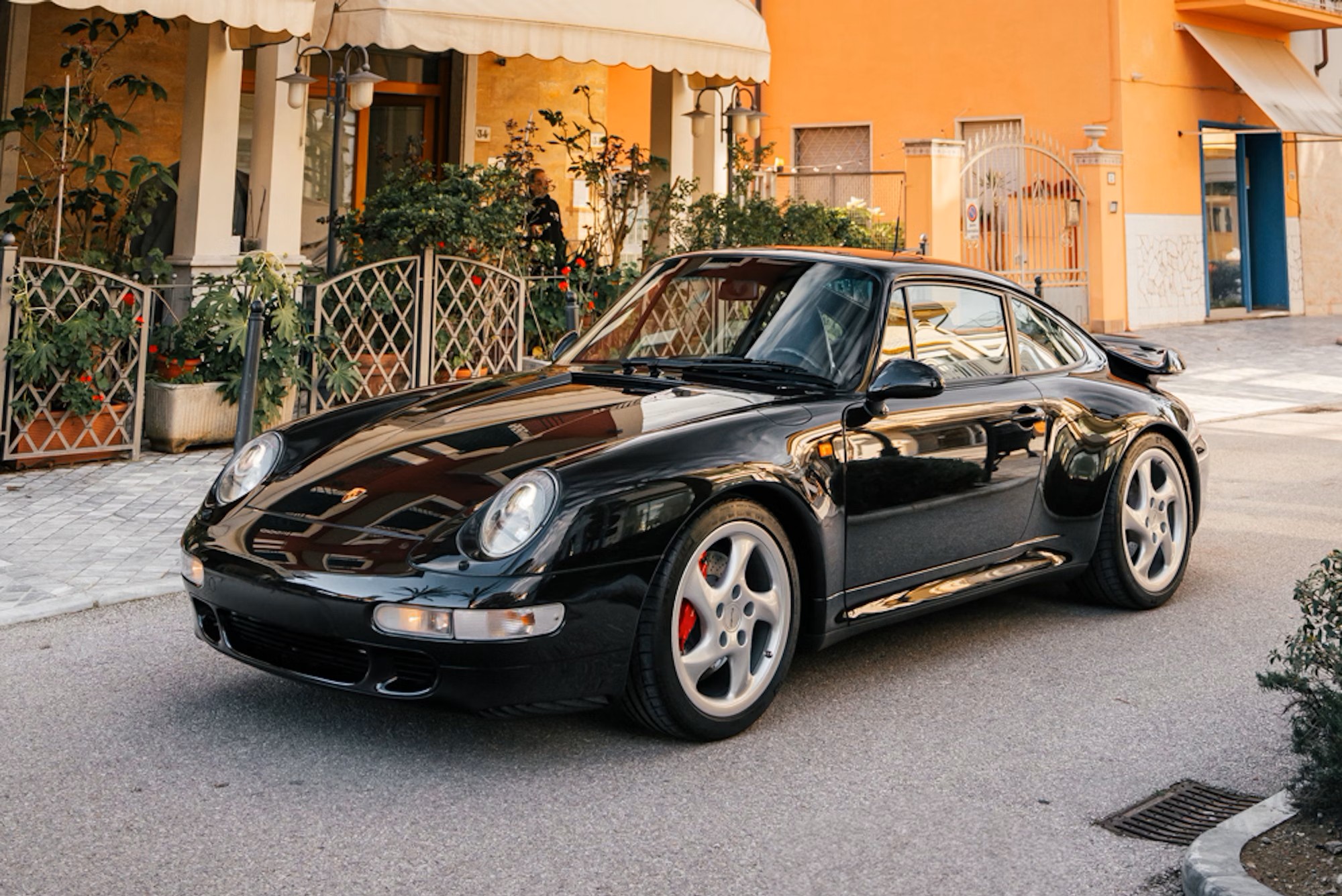
1995-1998 · 408 PS · around 5,978 built
- Engineering: 3.6L twin-turbo (KKK K16), all-wheel drive, six speeds. 0-100 in 4.5 s
- The first series 911 with twin-turbocharging
- "Big Red" brake system
- Hollow-spoke wheels ("Turbo Twist")
Home/Buyer's Guides/993 Turbo & Turbo S
The high point of air cooling · 1995-1998The crowning of an era: the differences, the twin-turbo and all-wheel-drive highlights, typical weak points, servicing costs, the logic behind the prices and a clear buying checklist.
The Porsche 993 Turbo marks the high point of the air-cooled Turbo era. As the first 911 Turbo with twin-turbocharging and standard Four-wheel drive it set technical standards. With its iconic looks (the fixed rear wing) and as much as 450 PS (Turbo S), it enjoys cult status today.
But the complex engineering calls for expertise: from leaking turbochargers to the specific servicing of the all-wheel-drive system. This buyer's guide is your guide to a safe investment in this piece of automotive history.
Focal points of the inspection: twin-turbo expertise, the viscous all-wheel-drive check, the "Big Red" brakes, the rarity of the Turbo S.
3.6L twin-turbo (KKK K16)
0-100 km/h (Turbo S: 4.1 s)
911 Turbo built (approx.)
Turbo S (450 PS) · Source note
1995-1998 · 408 PS · around 5,978 built
1997-1998 · 450 PS · Produced in a small series
For collectors and connoisseurs
Click the sections for the full assessment.
The 3.6L flat six is revolutionary: two small KKK K16 turbochargers (instead of one large one) all but eliminate turbo lag. Electronic boost control.
Weak points:
The first Turbo with permanent all-wheel drive (a viscous coupling, 5-40 % of the power to the front). Transmission: the uprated G64/50 (six speeds).
Brakes: the "Big Red" four-piston system with 322 mm discs all round. Extremely fade-resistant, but expensive to replace.
Suspension: The LSA rear axle with uprated components. Harder springs and dampers than on the Carrera.
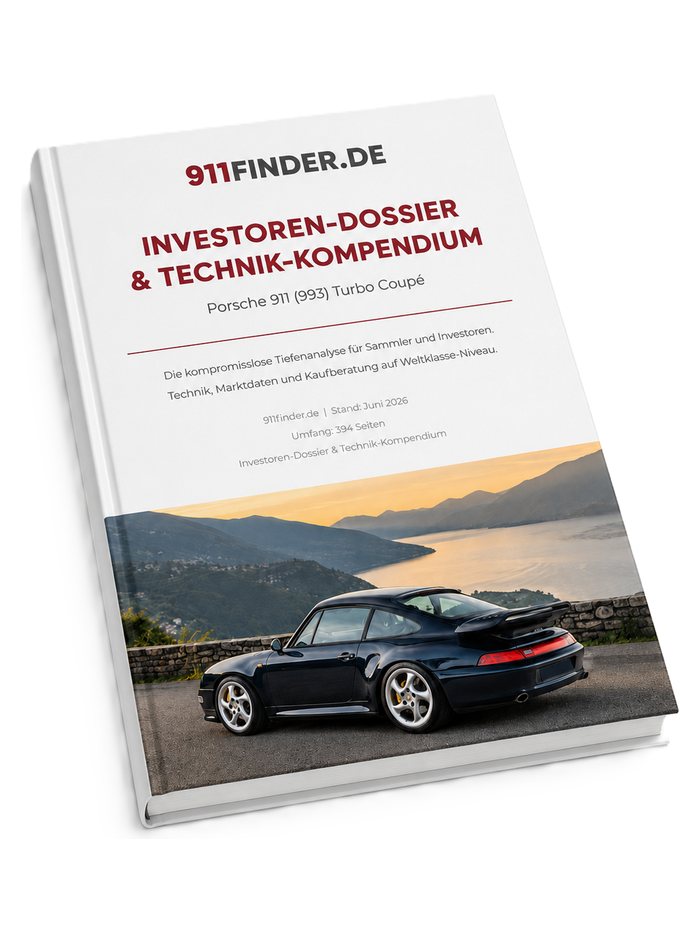
PDF · 394 pages · data as of September 2026 · English or German. Delivered within 24 hours of payment.
The Turbo premium is real. Plan for reserves.
| Work | Approx. cost (€) |
|---|---|
| Minor service | 800 - 1,200 |
| Major service | 1,500 - 2,500 |
| Turbocharger replacement (each) | 2,500 - 3,500 |
| Clutch, complete | 2,500 - 3,500 |
| Brake system, complete | 3,000 - 4,500 |
| Engine overhaul | 15,000 - 25,000 |
| Air-conditioning repair | 2,000 - 3,000 |
| Item | Approx. cost (€) |
|---|---|
| Insurance (fully comprehensive) | 1,500 - 3,500 |
| Servicing reserves | 2,500 - 4,000 |
| Tyres (pro rata) | 600 - 800 |
The 993 Turbo is among the most value-stable classic Porsche models.
| Model | Condition "good" | Condition "very good" | Collector's car |
|---|---|---|---|
| 911 Turbo (993) | €120k - €150k | €150k - €200k | €200k and more |
| 911 Turbo S (993) | €250k - €350k | €350k - €500k | €500k and more |
| 911 GT2 (993) | €600k and more | €800k and more | €1,000k and more |
As of 2025. The documented median sale prices from June 2026 are higher: 993 Turbo €219,993, WLS 1 (430 PS) €249,900, WLS 2 (450 PS) €339,900; the one unambiguously documented Turbo S sale achieved €650,000 (MarqueScope SOLD archive, 115 sales with a price stated). Details and methodology: 993 Turbo & Turbo S price development.
The 993 Turbo is the ultimate air-cooled statement. Buying recommendation: a late Turbo (97/98) or a Turbo S offers the greatest potential for growth in value. Always insist on a complete history and originality (no chip tuning).
The listing, the paperwork and the price checked against real market data before you travel to view the car. A PDF dossier, usually within 24 h.
€199 incl. VAT · fixed price Assessment Level 2 · remoteDigital Audit plus follow-up questions, dealer answers, paperwork and a negotiating strategy, through to a clear buying decision.
€499 incl. VAT · audit included Assessment Level 3 · on siteA physical assessment where the car is: paint measurement, diagnostic readout, technical check, test drive and a negotiation brief.
from €790 incl. VAT · plus travelDo you already own a 911 from this model series? The Vehicle Documentation & Market Valuation puts the history, the paperwork and the market value of your car in order (€249 incl. VAT). Still looking? Then the right route is the Sourcing Enquire and name the model: Request a Digital Audit for a car from this model series.