911FINDER
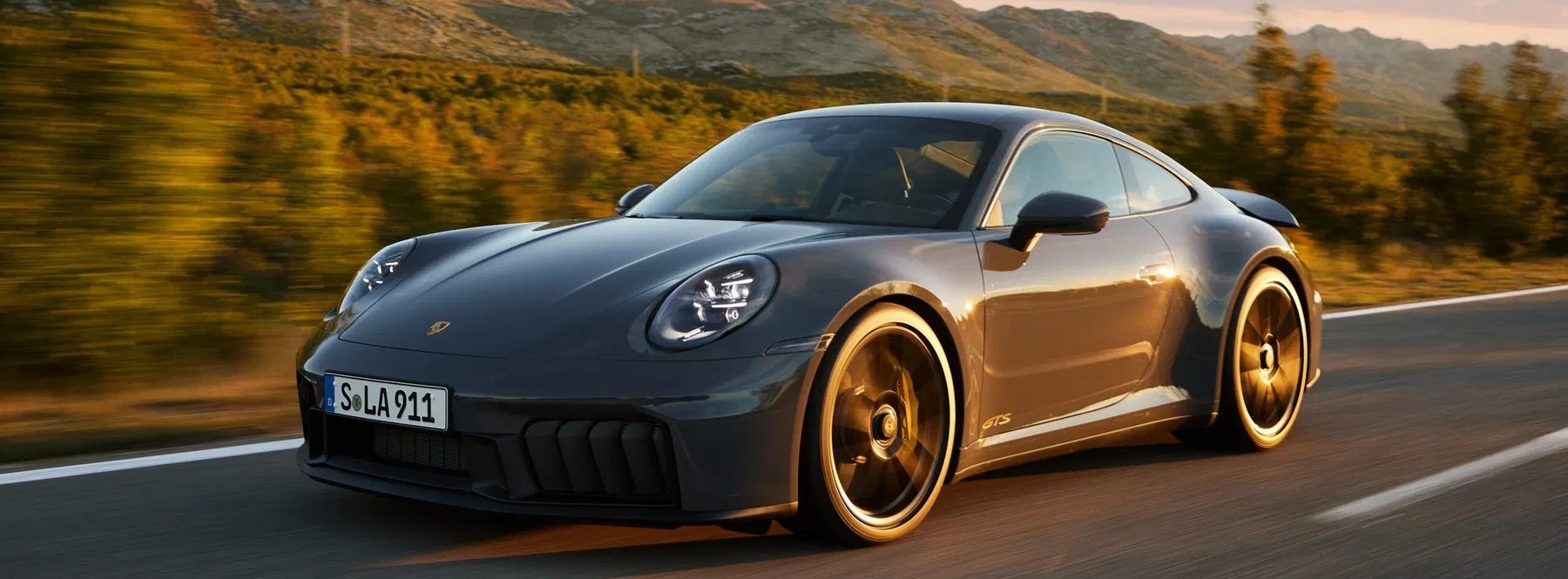
Porsche 992.2 Carrera GTS T-Hybrid

Home/Buyer's Guides/992.2 GTS

The first hybrid 911 · from 2024

Porsche 992.2 Carrera GTS T-Hybrid buyer’s guide

A technical milestone: prices, weak points, checks and a checklist, so you can judge condition, history and options with confidence.

T-Hybrid technology Weak points Options Variants Running costs Prices and conclusion
A technical milestone

The first hybrid 911

The Porsche 911 Carrera GTS of the 992.2 range marks a historic turning point: it is the first hybrid 911. Introduced in May 2024, it combines an entirely new 3.6-litre flat-six with an electrically assisted turbocharger (the eTurbo), an electric machine integrated into the PDK and a 400-volt high-voltage battery. Porsche calls the system "T-Hybrid", derived from the Porsche 919 Hybrid, the three-time Le Mans winner.

At 541 PS of system output and 610 Nm it is the most powerful GTS there has ever been. The technology all but eliminates turbo lag: the eTurbo reaches full boost in under 0.8 seconds. For the first time the engine runs permanently at lambda 1, which is to say without enriching the mixture under full load. The result is motorsport technology for the road, in a 911 you can use every day.

541 PS

System output, 610 Nm

3.0 s

0 to 100 km/h

eTurbo

919 technology

400 V

High-voltage system, PDK only

A deep dive into the technology

What sets the 992.2 GTS apart from the Carrera S

The GTS is not simply an uprated S. It has an entirely different drivetrain.

The T-Hybrid drivetrain

541 PS · 610 Nm · 3.0 s · standard

  • An entirely new 3.6-litre flat-six (code 9A3B6) with a single, electrically assisted turbocharger
  • A 56 PS electric machine within the eight-speed PDK
  • A 1.9 kWh 400 V battery under the bonnet
  • The Carrera S keeps the conventional 3.0-litre twin-turbo with 480 PS and no hybrid system
  • That makes the GTS a technological leap

Suspension and equipment

Motorsport DNA as standard

  • PASM sports suspension (10 mm lower) with helper springs at the rear
  • Rear-axle steering and PTV Plus (torque vectoring with a limited-slip differential) as standard
  • Appearance: the Sport Design package, black detailing, matrix LED headlights and adaptive cooling flaps
  • Interior: Race-Tex, Sports Seats Plus, the GT sports steering wheel and Sport Chrono with the mode switch

Technical data: 992.2 GTS against 992.2 Carrera S

Technical data992.2 GTS T-Hybrid992.2 Carrera S
Engine3.6-litre flat-six plus eTurbo plus electric motor3.0-litre twin-turbo flat-six
System output541 PS (398 kW)480 PS (353 kW)
Torque610 Nm530 Nm
0-100 km/h3.0 s3.5 s
Top speed312 km/h308 km/h
TransmissionEight-speed PDK (PDK only)8-speed PDK
Kerb weight1,595 kg1,540 kg (approx.)
High-voltage system400 V / 1.9 kWhNo
Rear-axle steeringStandardOptional
PTV PlusStandardOptional
List price from€175,500€154,800

How the T-Hybrid works, in detail

Four components, one system: why the 992.2 GTS is a technical milestone.

The 3.6-litre flat-six (9A3B6)

485 PS from the combustion engine

  • Entirely new. Capacity raised from 3.0 to 3.6 litres (bore 97 mm, stroke 81 mm), compression ratio 10.5:1
  • Runs permanently at lambda 1 (a stoichiometric mixture), even under full load
  • No belts, no alternator, no conventional starter: every ancillary runs electrically off the 400 V system
  • Porsche calls it the "first fully digital combustion engine": every ignition event is controlled individually

The electrically assisted turbocharger (eTurbo)

A 27 PS electric motor within the turbocharger

  • A single large turbocharger replaces the twin turbochargers used before
  • A 20 kW electric motor (27 PS) sits between compressor and turbine
  • Full boost of 1.8 bar in under 0.8 seconds, at any engine speed. Its predecessor took almost 3 seconds
  • On the overrun the motor recuperates up to 11 kW from the exhaust flow
  • The new turbocharger module weighs the same as the two old turbochargers together (roughly 27 kg)

The electric machine in the PDK (T for transaxle)

56 PS · 150 Nm continuous

  • A permanent-magnet synchronous machine between the flywheel and the gearbox, within the new eight-speed PDK
  • 56 PS and 150 Nm continuous, with a brief overboost to 65 PS
  • It replaces the conventional starter, assists at low revs and recuperates under braking
  • Unlike a conventional hybrid, the magnets sit on the outside of the rotor and the core is almost hollow. Extremely compact and light

The 400 V traction battery

1.9 kWh · 27 kg · under the bonnet

  • Not a conventional hybrid battery so much as a high-performance buffer, for charging and discharging quickly
  • Lithium-ion, 400 volts and only 27 kg
  • Sits under the bonnet for the best weight distribution
  • Its own cooling circuit (around 38 °C), separate from the drivetrain circuit (around 93 °C)
  • It feeds every electrical system: the air-conditioning compressor, PDCC, the front axle lift, the eTurbo and the electric machine
Specialist knowledge

Weak points and the risks of buying: what you need to know

The 992.2 GTS is technically brilliant, but as a new model it brings particular points to watch.

1. Standing still: the T-Hybrid’s Achilles heel +

In the handbooks for the T-Hybrid models (the GTS and the Turbo S), Porsche warns explicitly against leaving the car standing for long periods. The 400 V system and the many electrical consumers can cause problems after several weeks at a standstill.

  • The 400 V battery: the high-voltage battery discharges while the car stands. Once flat, the car cannot be started and a workshop visit is needed. Unlike the 12 V battery, the owner cannot jump-start this one
  • The 12 V battery: as on every modern Porsche it supplies the control units at rest. After two to three weeks standing it can go flat. Connect a trickle charger
  • Winter storage: if you lay the GTS up over the winter, agree the arrangements with your Porsche Centre. Starting it regularly and driving it briefly is recommended
A practical tip: The 992.2 GTS is a car that wants to be driven. If you only cover 1,000 km a year, consider a 992.1 GTS or a GT3 instead.
2. Engine and drivetrain: a new design, with the risk that carries +

The 3.6-litre engine (9A3B6) is an entirely new design, which means there is no long-term experience of it yet. The technology does, however, come from motorsport and was tested intensively.

  • Running at lambda 1: the engine works without enriching the mixture, and ignition is controlled cylinder by cylinder. That is demanding, but it removes the classic strain a rich mixture puts on the catalytic converter
  • Cooling the eTurbo: the turbocharger has a built-in turbo timer. Pumps keep cooling the bearings and housing after the engine is switched off, until a safe temperature is reached. An advance on the older cars
  • No belts: there are no drive belts, no alternator and no conventional starter. That removes the classic sources of wear, but it makes the car wholly dependent on the 400 V system
  • Early production: as with any new model, early cars (model years 2024 and 2025) may need software updates or minor rectification. Check the current software level
3. Transmission: an eight-speed PDK, and no manual any more +

For the first time in the history of the GTS there is no manual gearbox. The new eight-speed PDK is strengthened and houses the electric machine. It is the only transmission available.

  • Why no manual? The electric machine physically sits inside the gearbox, and a manual would not be compatible with that architecture. If you want a manual, you need the Carrera T (394 PS, no hybrid)
  • PDK quality: the new eight-speed PDK is built more robustly than its seven-speed predecessor, since it has to handle the additional loads from the electric machine. There is no long-term data yet
  • How it shifts: with the electric motor assisting, gear changes are faster and smoother again. In Sport Plus they are deliberately more aggressive
  • From an investment point of view: the absence of a manual could make the manual 992.1 GTS the more sought-after collector car over the long term
4. Sound, feel and driver assistance +
  • The character of the sound: the 3.6-litre sounds different from the 3.0-litre before it. Owners report a fuller sound at the top end but less presence lower down. The characteristic crackle on the overrun, familiar from the 991.2 and 992.1, is less pronounced. The sports exhaust (standard) helps, but the character is not the same
  • How it feels: thanks to the eTurbo the response is sensationally direct, with no lag at all. The electric motor fills the torque gap low down. Some testers compare the feel to a Turbo rather than a GTS. The extra 50 kg or so is noticeable but is offset by the sharper response
  • Driver assistance: EU rules require stop-start, lane keeping and the speed warning to be active at every start. There is no factory way to switch them off permanently, which grates day to day
  • A digital cockpit: the analogue rev counter is history. The new digital instrument cluster offers several views (the five-dial layout, Sport Chrono), but purists miss the physical feel. Apple CarPlay and Android Auto are built in, though their navigation cannot be shown in the instrument cluster
5. Body, brakes and suspension +
  • Brakes: the 911 Turbo’s high-performance system as standard, with ventilated discs (408 mm front, 380 mm rear). PCCB ceramics are optional. The standard brakes are more than enough for the road and the occasional track day
  • Wheels: 20-inch at the front (245/35 ZR20) and 21-inch at the rear (315/30 ZR21). The centre-lock wheels of the 992.1 GTS are no longer standard on the 992.2, which uses five-bolt wheels instead. That makes changing tyres considerably easier
  • PDCC (optional): active roll stabilisation clearly improves the car in fast corners, but it is a complex hydraulic system that may eventually need repair
  • Stone chips: as on every 911, the wide rear wings are vulnerable. Paint protection film is strongly recommended, particularly on the rear arches and the front bumper
  • Front axle lift: optional and worth having. It raises the nose by 40 mm, is actuated by the 400 V system and responds faster than its predecessor
6. The long view: hybrid complexity against future-proofing +

The T-Hybrid is a change of paradigm, and that has consequences over the long run.

  • Servicing complexity: the 400 V system requires specially trained technicians. Independent workshops cannot simply work on the high-voltage system, which ties owners more closely to Porsche Centres
  • Battery life: the 1.9 kWh battery is optimised for performance, meaning fast charging and discharging, not for range. Porsche gives no separate warranty for the high-voltage battery, and its life depends heavily on use
  • Future-proofing: the T-Hybrid meets coming EU emissions rules (running permanently at lambda 1), which makes the 992.2 GTS better placed for the future than its predecessor. Porsche has confirmed that the T-Hybrid technology will appear in further models; the Turbo S already has it
  • Residual values: as the first hybrid 911, the 992.2 GTS has the makings of a historical landmark, much as the first Turbo (the 930) was. Whether that supports residuals depends on how reliable the early cars prove to be
The 992.2 GTS model bible

The complete knowledge: the Investor Dossier & Technical Compendium, in German

250 to 600 pages of specialist knowledge (depending on the edition) on the 992.2 GTS: weak points in detail, the T-Hybrid technology explained, equipment specifics, inspection checklists, production figures, value-adding options and price forecasts.

€97

incl. VAT

To the compendium (German)
Advice on specification

Recommended options

What is actually worth having? Our view, for drivers and for investors.

The options you want +
  • Front axle lift: protects the front bumper from kerbs and ramps, and responds faster than before thanks to the 400 V actuation. Worth its weight in gold day to day
  • Sports exhaust: standard on the GTS, so nothing to pay
  • Paint protection film: not in the configurator, but your dealer can arrange it. It protects the areas prone to stone chips, and is strongly recommended
  • LED matrix design headlights: standard on the GTS, and they light the road superbly
Options worth recommending +
  • PCCB ceramic brakes: a clear reduction in weight (roughly 50% lighter than steel) and effectively wear-free on the road. Essential for track-day use; for the road the standard brakes are enough
  • PDCC (roll stabilisation): a noticeable difference in fast corners. But it is a hydraulic system that may need attention in time, so weigh the gain against the long-term cost
  • Lightweight package (Coupé): full carbon-fibre bucket seats, lightweight glass and a lightweight battery, saving up to 25 kg. It includes rear-axle steering and aerodynamic refinements. The top recommendation for buyers with sporting intent
  • 18-way sports seats: without the lightweight package, these offer the best compromise between comfort and lateral support
Options that add value (from an investment point of view) +
  • Special colours: Paint to Sample shades and special colours such as Rubystone Red, Shark Blue or Fish Silver Grey command premiums on the used market. Standard black and white are the most common and therefore add least
  • Lightweight package: rarely ordered and clearly sporting. It could become a sought-after feature over the long term
  • Rear-wheel drive (C2): historically, enthusiasts have wanted rear-wheel-drive GTS models more than the four-wheel-drive versions. The Coupé holds value better than the Cabriolet
  • The GTS interior package: matt carbon-fibre trim and contrast stitching in Carmine Red or Chalk. It lifts the cabin considerably
Model overview

The five GTS variants at a glance

All share the same T-Hybrid drivetrain. The differences are in the body and the drive.

ModelDrive0-100 km/hList price from
911 Carrera GTS CoupéRear-wheel drive3.0 s€175,500
911 Carrera GTS CabrioletRear-wheel drive3.1 s€189,700
911 Carrera 4 GTS CoupéFour-wheel drive3.0 s€183,700
911 Carrera 4 GTS CabrioletFour-wheel drive3.1 s€191,900 (approx.)
911 Targa 4 GTSFour-wheel drive3.1 s€193,500 (approx.)
Realistic estimates

Running costs & risk calculation

The GTS is a premium sports car, and the running costs reflect it.

Typical work and items

Work / itemApprox. costNote
Minor service (2 years / 30,000 km)€1,500-2,000Porsche Centre
Major service (4 years / 60,000 km)€2,500-3,500Including spark plugs and filters
Brake fluid change€200-350Every two years
Set of tyres (staggered 20/21-inch)€1,500-2,500Depending on make and type
Front discs and pads€2,000-3,000The Turbo brake system
PCCB brake discs (set)€8,000-12,000Extremely rarely needed
PDCC repair€2,000-4,000+Hydraulic components
400 V battery (replacement)Not yet knownNo cases known so far
Road tax (annual)approx. €424Euro 6 emissions class
Fully comprehensive insurance€2,000-4,000+ a yearDepends heavily on your no-claims record
Market prices and buying strategy, as at February 2026

Price ranges: used and nearly new

The 992.2 GTS is still young, and the market offers opportunities to the informed buyer.

SegmentPrice level
List price, Coupé (base)from €175,500
List price as typically specified€195,000-220,000
Nearly new / demonstrator€170,000-195,000
Used (the earliest cars)€165,000-190,000

The used market for the 992.2 GTS is still young. The first nearly new cars and demonstrators offer a saving against list. Note that heavily specified cars (special colours, the lightweight package) hold their value better.

992.2 GTS against 992.1 GTS: the direct comparison

Feature992.1 GTS (2021-2024)992.2 GTS (from 2024)
Engine3.0-litre twin-turbo flat-six3.6-litre flat-six plus eTurbo plus electric motor
Power480 PS / 570 Nm541 PS / 610 Nm
0-100 km/h3.3 s (PDK)3.0 s
TransmissionSeven-speed PDK or seven-speed manualEight-speed PDK (PDK only)
Weight (Coupé)approx. 1,545 kgapprox. 1,595 kg
High-voltage systemNo400 V / 1.9 kWh
Turbo lagSlightEffectively eliminated
SoundThe classic twin-turbo flat-sixFuller, but different
CockpitA mix of analogue and digitalFully digital
Centre lockStandardFive-bolt wheels (standard)
List price (base)approx. €155,000 (2023)€175,500

The strategic conclusion: The 992.2 GTS is a technical milestone and the most powerful GTS there has ever been. It is not a collector car in the classic sense but a showcase for the technology.

Against the 992.1 GTS: If you prefer the more emotional sound and a manual gearbox, the 992.1 GTS suits you better. If you want the best engineering and the sharpest response, take the 992.2.

The 911Finder buying recommendation

Look for a GTS Coupé with rear-wheel drive with the lightweight package, or at least the front axle lift. Check the software level and ask how long the car has stood. Make sure every recall and update has been carried out.
The next step

Buy this 911 with confidence, with 911Finder.

Do you already own a Porsche 992.2 Carrera GTS T-Hybrid? The Vehicle Documentation & Market Valuation puts the history, the paperwork and the market value of your car in order (€249 incl. VAT). Still looking? Then the right route is the Sourcing Enquire and name the model: Request a Digital Audit for a Porsche 992.2 Carrera GTS T-Hybrid.