The engine (MA2.75)
525 PS · 9,000 rpm
- Based on the 4.0L unit from the GT3
- Sharper camshafts and individual throttle bodies for an even more vicious throttle response
- Regarded as extremely durable
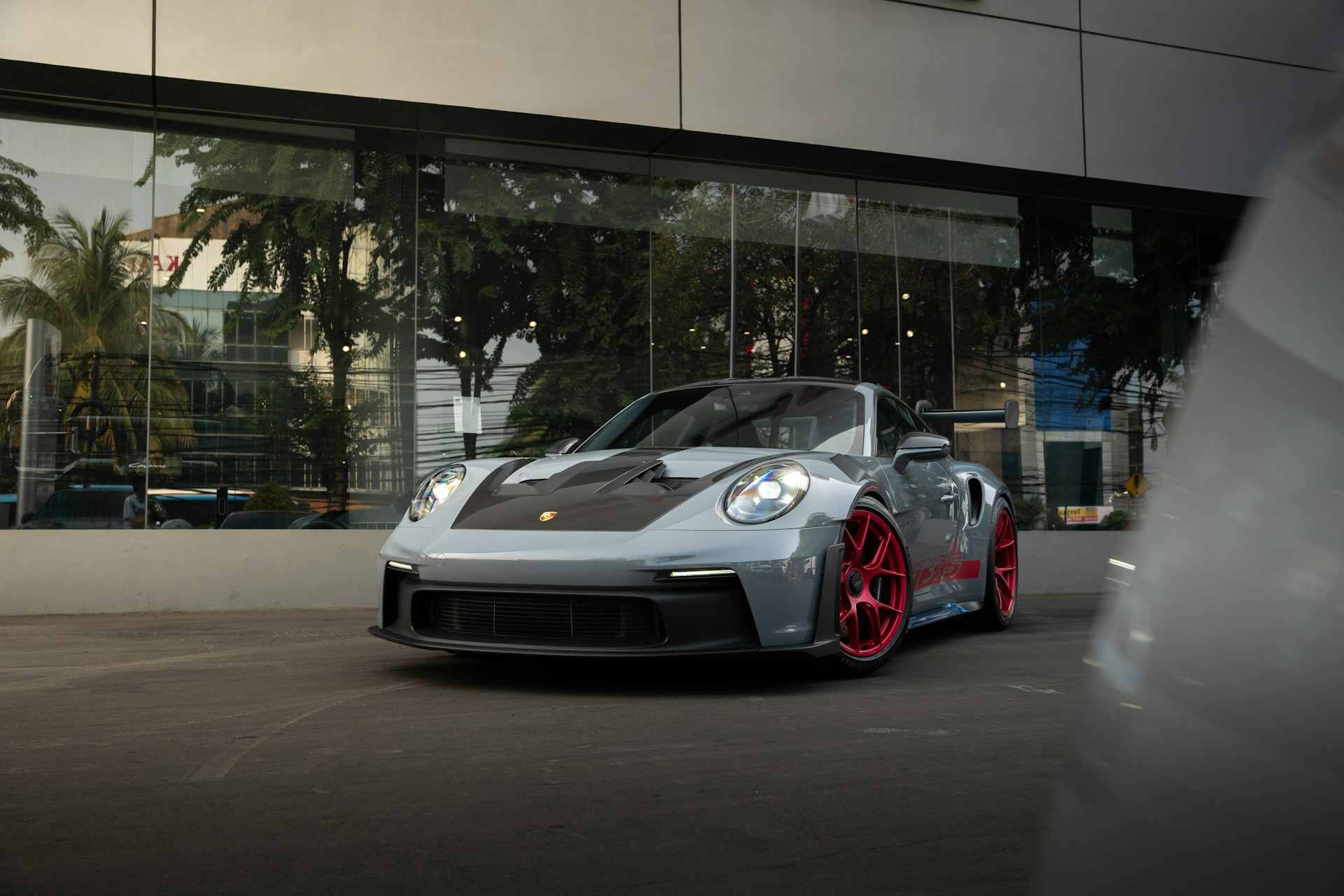
Home/Buyer's Guides/992.1 GT3 RS
The wind tamer · 2022-2025Aerodynamics instead of displacement: prices, weak points, checks and checklist. So you can assess history, track use and options with confidence.
The Porsche 992.1 GT3 RS (from mid-2022) marks a change of paradigm. Rather than simply chasing more power, the engineers turned to radical aerodynamics. The result is the most extreme naturally aspirated car in Porsche history.
With its 525 PS 4.0-litre engine (MA2.75) and a first-time centre radiator layout (which does away with the front luggage compartment), it reaches downforce figures that exceed even GT3 race cars. Highlights such as the active DRS (Drag Reduction System) in the rear wing and compression and rebound damping adjustable directly from the steering wheel make it a professional race car with a number plate. For investors, the extreme demand and limited availability make it a hard asset.
4.0-litre naturally aspirated (MA2.75)
rpm rev limit
Downforce, active aero
F1 technology in the rear wing
Why the 992 RS is faster without being much more powerful.
525 PS · 9,000 rpm
860 kg of downforce
Unique to the 992 RS
If something breaks here, the bill runs into five figures.
The system is highly complex. Hydraulic cylinders move the wing, electric motors the flaps at the front.
The 992 RS takes lightweight construction to extremes. Wings, bonnet, roof and, for the first time, the doors are made of CFRP (carbon fibre).
The drivetrain is the most robust element of the car.
250 to 600 pages of expert knowledge (depending on the edition) on the 992.1 GT3 RS: detailed weak points, engine codes, specification details, inspection checklists, production figures, value-enhancing options and price forecasts.
Motorsport costs money. Here is the reality.
| Work / fault | Approx. cost (€) | Note |
|---|---|---|
| Magnesium wheels (set) | more than 15,000 | Optional (Weissach) |
| Carbon door (bare shell) | 10,000+ | After an accident (each) |
| PCCB brake discs (per axle) | 5,000+ | Parts only |
| PDK gearbox replacement | 5,000 - 15,000+ | If it fails |
| Active aero (repair) | 2,000 - 5,000 | Actuators/control unit |
| Tyres (Cup 2 R set) | 2,000 - 3,000 | Extremely high wear |
| Front axle lift | 1,500 - 3,000 | Leaks |
| Segment | Price range |
|---|---|
| Market entry | from €300,000 |
| Market standard (Weissach) | €330,000 - €380,000 |
| PTS / low mileage | €400,000+ |
Factor: the Weissach package is all but essential for holding value. Without Weissach, the car is considerably harder to place on the market.
The strategic conclusion: An uncompromising track car with road registration. The 992 RS redefines what is aerodynamically possible.
Investment: The extreme complexity (active aero) and the sensitive materials (carbon exterior, magnesium) make an expert inspection essential before purchase. An accident-free RS with the Weissach package is a liquid asset.
The listing, the paperwork and the price checked against real market data before you travel to view the car. A PDF dossier, usually within 24 h.
€199 incl. VAT · fixed price Assessment Level 2 · remoteDigital Audit plus follow-up questions, dealer answers, paperwork and a negotiating strategy, through to a clear buying decision.
€499 incl. VAT · audit included Assessment Level 3 · on siteA physical assessment where the car is: paint measurement, diagnostic readout, technical check, test drive and a negotiation brief.
from €790 incl. VAT · plus travelAlready own a Porsche 992.1 GT3 RS? The Vehicle Documentation & Market Valuation puts the history, the paperwork and the market value of your car in order (€249 incl. VAT). Still looking? Then the right route is the Sourcing Enquire and name the model: Request a Digital Audit for a Porsche 992.1 GT3 RS.