911FINDER
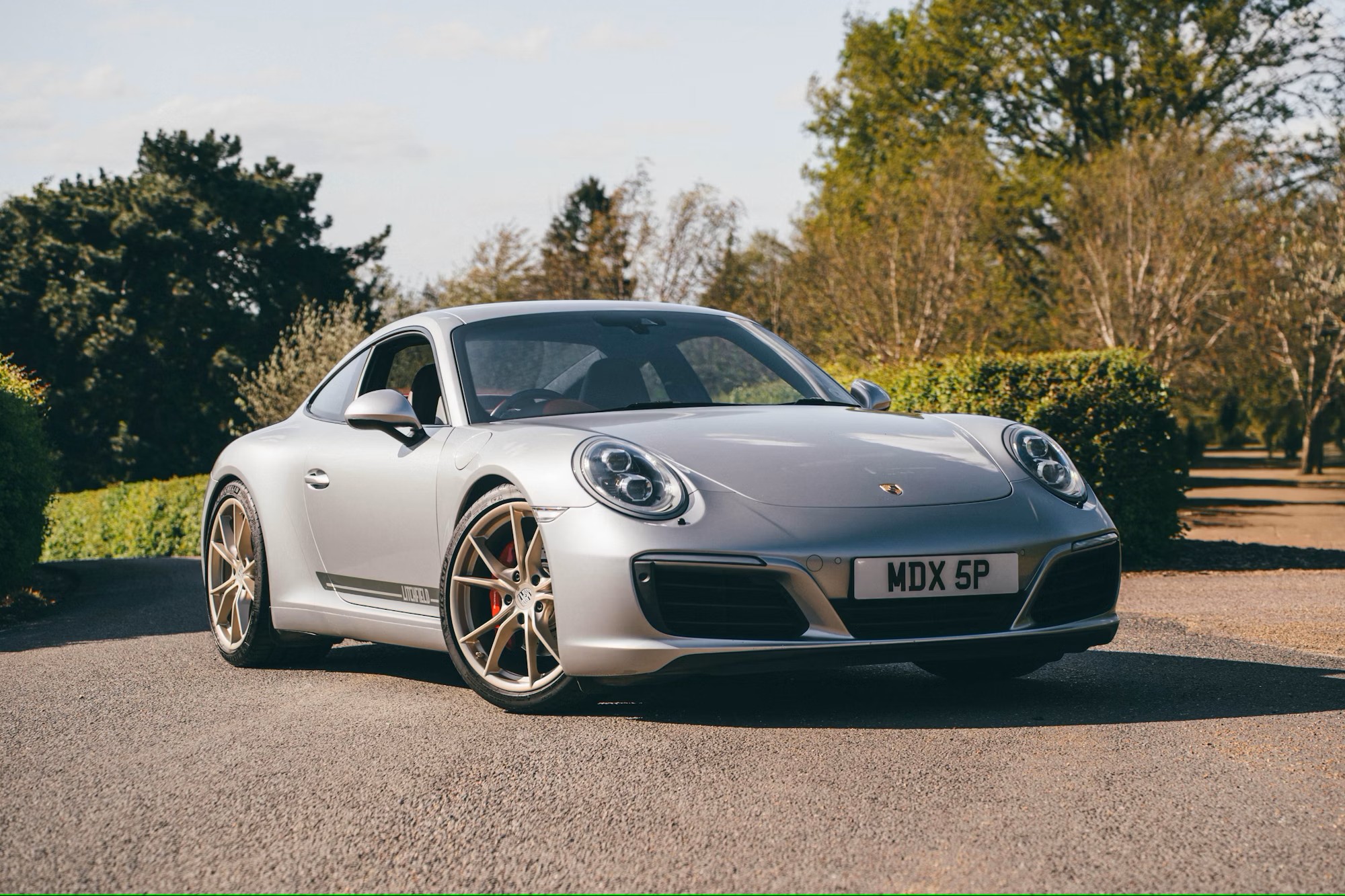
Porsche 991.2 Carrera

Home/Buyer's Guides/991.2 Carrera & Carrera S

The turbo revolution · 2016-2019

Porsche 991.2 Carrera & Carrera S Buyer's Guide

Power through forced induction: prices, weak points, checks and checklist. So you can assess condition, history and options with confidence.

✓ 3.0L twin-turbo (9A2)   ✓ Rear-axle steering (option)   ✓ PCM 4.0 (Apple CarPlay)   ✓ Water pump check

The new power units Weak points Running costs Market prices Conclusion & recommendation
A historic turning point

For the first time without a naturally aspirated engine

The facelift of the 991 series (internally 991.2) marked a historic turning point at the end of 2015: for the first time in the history of the 911, the classic Carrera was no longer driven by a naturally aspirated engine. In its place came the new 3.0-litre twin-turbo flat six (9A2) .

The aim was clear: more torque, better efficiency and compliance with stricter emissions standards. While purists miss the sound of the naturally aspirated engine, the 991.2 is objectively convincing with its brutal pull from low revs. Combined with the new PCM 4.0 infotainment and the optional rear-axle steering, it is the more modern, faster sports car. But the turbo technology brings new servicing requirements with it.

370 PS

Carrera, 3.0L twin-turbo

420 PS

Carrera S, 500 Nm

RAS

Rear-axle steering (option)

PCM 4.0

Apple CarPlay

The new power units

Less displacement, but considerably more punch

Carrera (3.0L twin-turbo)

370 PS · 450 Nm

  • Thanks to the turbochargers, maximum torque is available from as low as 1,700 rpm
  • Feels considerably faster in everyday use than the old 3.8L naturally aspirated engine
  • Smaller turbochargers give an extremely quick throttle response

Carrera S (3.0L twin-turbo)

420 PS · 500 Nm

  • Differences: larger turbochargers, revised engine management and exhaust system
  • Rear-axle steering was available for the Carrera as an option for the first time
  • Rear-axle steering transforms agility and stability

Transmission and GTS

VariantThe assessment
PDKThe dual-clutch transmission was matched to the turbo characteristics (inverted shift pattern on the lever: pull to shift up)
Manual (7-speed)Still seven gears, but with a dual-mass flywheel for greater refinement
GTS (from 2017)With 450 PS and the wide body, the sweet spot of the series
Specialist knowledge

Weak points: water pump and turbochargers

The 9A2 engine is robust, but has specific problems with its ancillaries.

The water pump: the Achilles heel +

This is the most common problem on the 991.2. The water pump has a vacuum-controlled slide valve for rapid warm-up.

  • The problem: the seal to the vacuum section starts to leak. Coolant gets into the vacuum system
  • The consequence: failure of the heating, a cooling system fault and, in the worst case, damage to the vacuum valves (COV) of the exhaust system
  • The remedy: check for traces of coolant at the pump. Replace with the revised version (cost: €600 - €1,200)
Turbochargers and wastegates +

The turbos are generally durable, but not free of problems.

  • Wastegate rattle: the wastegate linkage can develop play and rattle metallically (audible on a cold start or on a change of load)
  • Oil leaks: Leaks in the oil lines to the turbochargers do occur
  • Cost: replacing a turbocharger is involved (the rear apron and the charge air coolers have to come off)
High-pressure fuel pump and carbon build-up +
  • High-pressure fuel pump (HPFP): As on all direct-injection engines, the pump can fail. Symptom: long cranking, loss of power (cost: €1,500 - €3,000)
  • Carbon build-up: in the long run, DFI engines tend towards deposits on the inlet valves (because no fuel washes over them). This is not yet a mass phenomenon on the 991.2, but should be kept in mind at high mileages
PCM 4.0, PDCC and suspension +
  • PCM 4.0: the new infotainment is considerably better (touch, CarPlay), but can suffer software crashes or show delamination of the display
  • PDCC: the active roll stabilisation is wonderful to drive, but repairs to the hydraulic system run into thousands
  • Radiators: The front air intakes are large, and stone chips on the air-conditioning condensers are common
The 991.2 Carrera & Carrera S model bible

The complete knowledge: the Investor Dossier & Technical Compendium, in German

250 to 600 pages of expert knowledge (depending on the edition) on the 991.2 Carrera and Carrera S: detailed weak points (water pump, turbo check), engine codes, specification details, inspection checklists, production figures, value-enhancing options and price forecasts.

€97

incl. VAT

To the compendium (German)
Risk calculation

Running costs & risk calculation

Modern engineering is reliable, but expensive when a repair is needed.

Typical work & faults

Work / faultApprox. costNote
Water pump (replacement)€600 - €1,200A frequent failure (vacuum)
High-pressure fuel pump (HPFP)€1,500 - €3,000With starting problems
PDK transmission (replacement)5,000 - 15,000+ €Porsche rarely repairs individual parts
Turbocharger (each)€2,000 - €3,500With a wastegate fault/rattle
PDCC repair2,000 - 4,000+ €Hydraulic components
Brake discs (S model)€1,200 - €1,800Wear item (steel)
Major service€1,500 - €2,500Spark plugs included (important)
Market prices & investment, as at May 2025

Market prices & investment

A little cheaper than the naturally aspirated 991.1, but with high practical value.

Current price ranges

Model / mileagePrice range
Carrera (base, more than 100,000 km)€75,000 - €80,000
Carrera (under 100,000 km)€80,000 - €105,000
Carrera S (under 100,000 km)€90,000 - €120,000
GTS / Targa€110,000 - €130,000+

Factor: specification matters more here than on the 991.1. Cars without the sports exhaust system (sound) or without Sport Chrono are harder to sell.

The strategic conclusion from 911Finder

The 991.2 offers the perfect balance of everyday usability (CarPlay, torque) and performance. The turbo engines are reliable, as long as an eye is kept on the water pump. Buying recommendation: Look for a Carrera S with rear-axle steering. In driving dynamics, that is the biggest leap in modern 911 history.

The next step

Buy this 911 with confidence, with 911Finder.

Do you already own a 911 from this model series? The Vehicle Documentation & Market Valuation puts the history, the paperwork and the market value of your car in order (€249 incl. VAT). Still looking? Then the right route is the Sourcing Enquire and name the model: Request a Digital Audit for a car from this model series.