The engine (MA1.76)
500 PS · 8,800 rpm
- The redemption: it removed the design weaknesses of the 3.8-litre predecessor
- A crankshaft in high-purity steel (as in the 919 Hybrid Le Mans car)
- Regarded as extremely robust and eager to rev
Home/Buyer's Guides/991.1 GT3 RS
The aero monster · 2015-2016Function dictates form: prices, weak points, technical checks and a checklist. So you can assess the history, the condition and any track use with confidence on site.
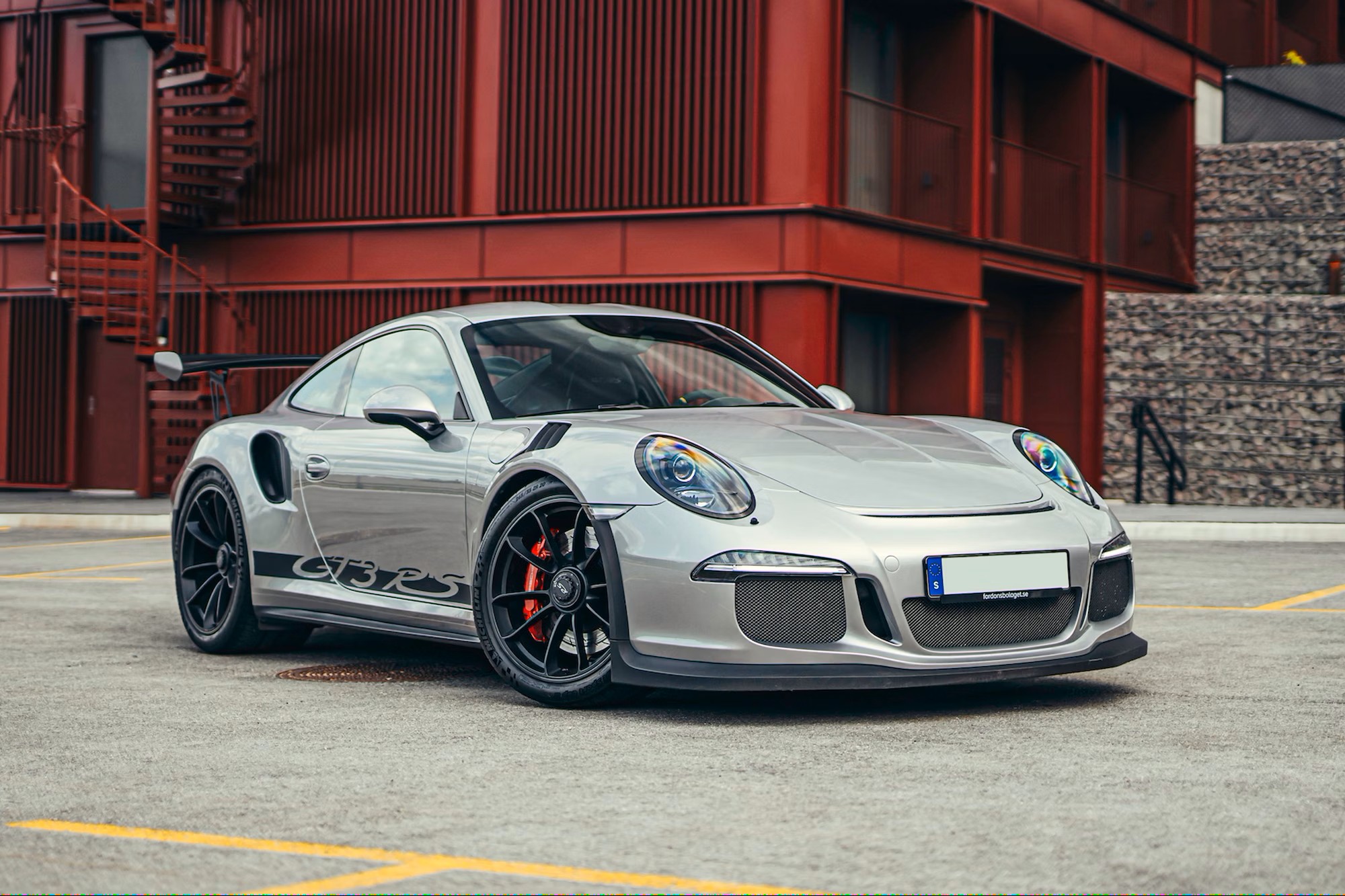
The Porsche 911 GT3 RS of the 991.1 series was more than just a faster GT3. It was a technological statement. While the "ordinary" 991.1 GT3 struggled with engine problems, in 2015 the RS introduced the completely new and extremely durable 4.0-litre naturally aspirated engine (MA1.76) engine.
Visually it broke taboos: the huge air outlets on the front wings (the louvres) and the gigantic rear wing showed that downforce came before aesthetics here. With the wide Turbo body, a magnesium roof and the obligatory PDK gearbox, it is today a sought-after collector car that bridges road and racetrack.
4.0-litre naturally aspirated (MA1.76)
rpm rev limit
Roof skin, CFRP body panels
Pit speed button, PDK-S
500 PS · 8,800 rpm
Magnesium & carbon
No manual gearbox was available. The seven-speed PDK was laid out as "PDK Sport" (PDK-S). Shorter ratios, a "paddle neutral" function (disengaging the clutch by pulling both paddles) and a pit speed button for the pit lane underline the motorsport focus.
The engine holds up, but the bodywork and suspension parts are costly.
Lightweight construction has its price. Check the bodywork meticulously.
The RS uses uniball bearings for maximum precision. But that also means more wear.
372 pages of specialist knowledge on the 991.1 GT3 RS: detailed weak points, engine codes, specification details, inspection checklists, production figures, the options that add value and price forecasts.
High-end materials mean high-end prices.
| Work / fault | Approx. cost | Note |
|---|---|---|
| Magnesium roof (replacement) | €10,000 - €15,000 | After an accident or hail |
| PCCB brake discs (per axle) | 5,000+ € | Parts only (ceramic) |
| PDK gearbox replacement | 5,000 - 15,000+ € | If it fails |
| Front axle lift repair | €1,500 - €3,000 | Leaks |
| Tyres (Cup 2, a set) | €1,800 - €2,500 | Wear item |
| Major service | €2,000 - €3,500 | Every 20,000 km / 2 years |
| PASM dampers (per axle) | €1,500 - €2,500 | Wear item |
The 991.1 RS is extremely stable in value and sought after.
| Category | Price range |
|---|---|
| Entry level (track history) | €175,000 - €190,000 |
| Market level (well cared for) | €190,000 - €220,000 |
| Collector car (low mileage) | €230,000+ |
The deciding factor: colours such as Lava Orange or Ultraviolet are the signature colours of this model and are often easier to sell than white or silver.
An extremely focused racetrack sports car with an engine that is finally reliable. The investment check: The 991.1 RS is a safe bet, but only if it has not been driven into the ground. Checking the control units (over-revs) and the condition of the ceramic brakes decides a difference in value of €30,000.
The listing, the paperwork and the price checked against real market data before you travel to view the car. A PDF dossier, usually within 24 h.
€199 incl. VAT · fixed price Assessment Level 2 · remoteDigital Audit plus follow-up questions, dealer answers, paperwork and a negotiating strategy, through to a clear buying decision.
€499 incl. VAT · audit included Assessment Level 3 · on siteA physical assessment where the car is: paint measurement, diagnostic readout, technical check, test drive and a negotiation brief.
from €790 incl. VAT · plus travelDo you already own a Porsche 991.1 GT3 RS? The Vehicle Documentation & Market Valuation puts the history, the paperwork and the market value of your car in order (€249 incl. VAT). Still looking? Then the right route is the Sourcing Enquire and name the model: Request a Digital Audit for a Porsche 991.1 GT3 RS.