911FINDER
Porsche 964 Carrera

Home/Buyer's Guides/964 Carrera 2 & Carrera 4

The turning point of a legend · 1988-1994

Porsche 964 Carrera 2 & Carrera 4 Buyer's Guide

Modern engineering in the classic design of the air-cooled era: technical highlights, typical weak points, corrosion spots, market prices and a buying check.

C2 vs C4 Weak points Repair costs Market prices Conclusion & recommendation
The significance of the series

Why the 964 is a turning point

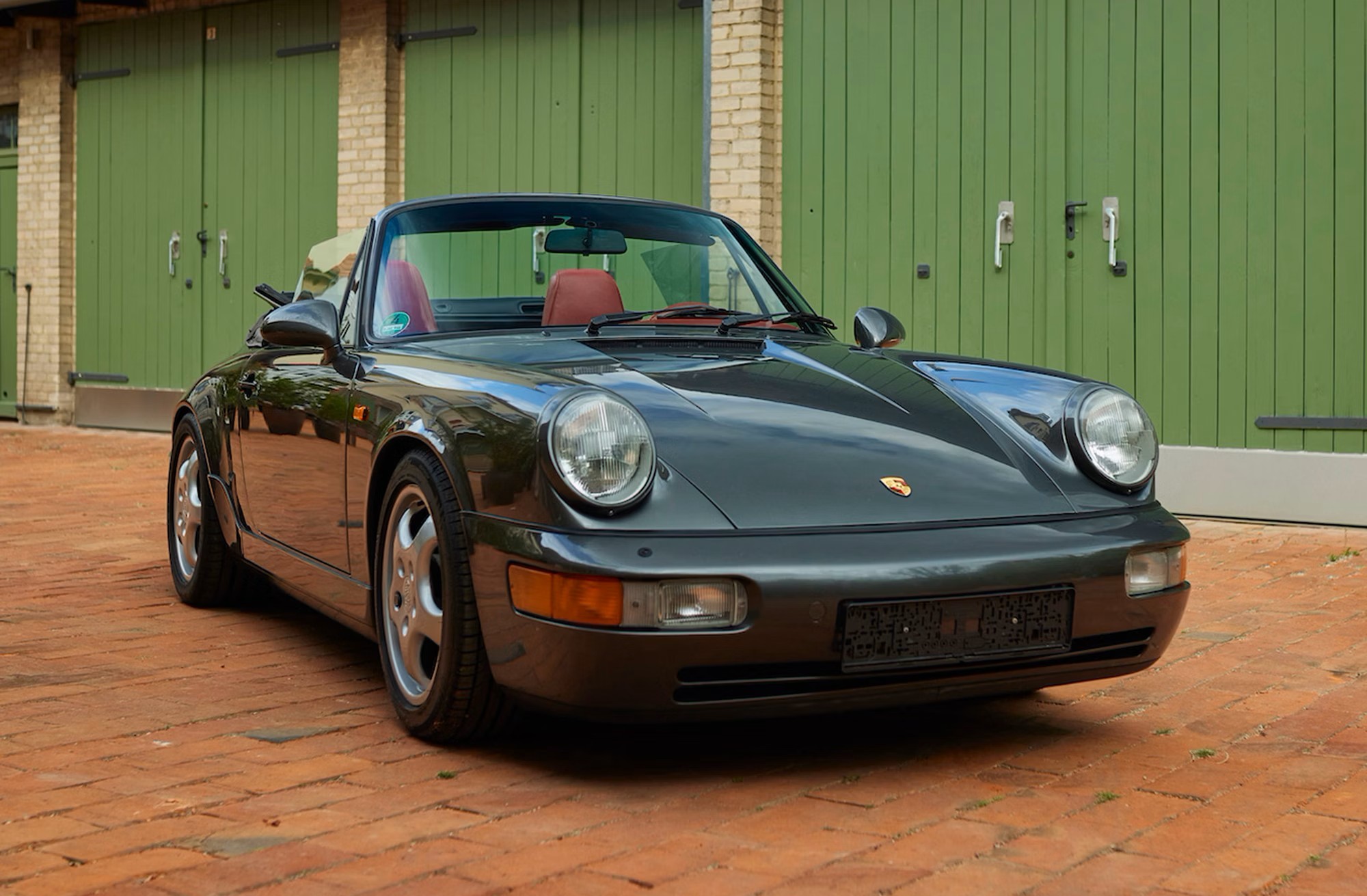
The Porsche 911 of the 964 series represents one of the most significant technical advances in the history of the 911. With the introduction of standard ABS, power steering and, for the first time, a full Four-wheel drive (Carrera 4), the 964 brought modern engineering into the classic design of the air-cooled era.

Driven by the 3.6-litre flat six with 250 PS (M64/01), the 964 offers a refinement its predecessor lacked. But the technical complexity brings new risks: from oil leaks through problems with the dual-mass flywheel to complex electronic components, buying a 964 calls for the greatest expertise: twin-plug ignition expertise, the PDAS all-wheel-drive check, the dual-mass flywheel overhaul analysis and an investment rating.

250 PS

3.6-litre flat six M64/01

3.6 l

displacement, twin-plug ignition

ABS

as standard, plus power steering

100 kg

Weight advantage, C2 over C4

C2 vs C4 comparison

Carrera 2 versus Carrera 4: which one suits you?

Both share the M64 engine, but their drivetrain concepts redefine the driving experience entirely.

964 Carrera 2 (C2)

Introduced in 1990 · the purist

  • Embodies the purer form of the 911, with classic rear-wheel drive
  • Weight: around 100 kg lighter than the C4
  • Handling: more agile, more direct and rear-biased
  • Servicing: fewer sources of faults because there is no all-wheel-drive system
  • Status: today often the more sought-after variant for keen drivers

964 Carrera 4 (C4)

The 1989 debutant · the technology carrier

  • Introduced the innovative PDAS (Porsche Dynamische Allrad Steuerung, dynamic all-wheel-drive control)
  • Safety: superior traction on a wet or snow-covered road
  • Handling: more neutral and more forgiving at the limit
  • Complexity: the hydraulics, sensors and control units are demanding to maintain
  • Suitability: perfect for year-round drivers and the safety-conscious
Technical substance

Weak points and detailed analysis

From the body to the complex electrics: what you need to know before buying.

1. Body and exterior: corrosion protection and problem areas +

Despite full galvanising, after more than 30 years the 964 is not immune to corrosion. The protection has often been compromised during repairs or glass replacement.

  • Window frames: blistering at the windscreen and rear window seals caused by improper replacement in the past
  • Battery box: corrosion from leaking battery acid in the luggage compartment
  • Sills and jacking points: hidden behind plastic covers. Using a borescope here is strongly advisable
  • Luggage compartment floor: signs of grounding or dents from a hard impact. Creasing can point to damage at the rear
  • Appearance: faded rear light bars are an expensive shortcoming
  • Cabriolet in particular: check the Sonnenland fabric roof and the mechanism. A new roof costs several thousand euros
A professional tip: Use a paint thickness gauge. Uneven panel gaps and differences in colour are clear warning signs of accident damage.
2. Engine and drivetrain: the M64 unit +

The 3.6-litre engine (250 PS) with twin-plug ignition is regarded as robust, but it has specific thermal issues.

Engine weak points:

  • Oil leaks: cam covers, the timing case and crankshaft seals are the classics. A comprehensive reseal can cost as much as €8,000
  • Dual-mass flywheel: early cars (to 1991) used the Freudenberg unit (rubber), which wears quickly. Conversion to the LUK unit (metal springs) is standard practice
  • Distributor belt: if the small belt breaks, the second ignition circuit fails. Overheating and engine damage loom. Replacement every 80,000-120,000 km is essential
  • Alternator: often vulnerable before 1991. Replacement costs as much as €1,650

Drivetrain, C2 vs C4:

  • G50 gearbox: very robust. A clutch replacement costs around €1,300 - €2,400
  • PDAS (all-wheel drive, C4): a complex hydraulic system. Faulty control units cost more than €1,000, ABS control units as much as €4,000
3. Suspension, brakes and steering: the modern era +

The move from torsion bars to coil springs (MacPherson struts at the front, a semi-trailing arm axle at the rear) improved comfort enormously. But age eats away at the precision.

  • Suspension bushes: the rubber mounts age and become porous. Replacing them improves the handling significantly
  • Dampers: original dampers are expensive. Quality sports suspension (Bilstein PSS10) costs around €2,500 - €3,000 plus fitting
  • Power steering: check the pump and the steering box for leaks. Repairs are costly
  • Brakes: fade-resistant, with ABS. A set (discs and pads) costs €800 - €1,200 in parts
Important: Pay attention to the tyres. Tyres that have aged beyond six to eight years have to be replaced whatever the tread depth. Correct alignment is essential on the 964.
4. Interior and electrics: comfort with pitfalls +

The interior is of higher quality, but electronically overloaded compared with its predecessor.

  • Air conditioning: R12 refrigerant is banned. Conversion to R134a is essential. Repairs (compressor/evaporator) often cost more than €2,000
  • CCU (climate control unit): faulty actuators or control units are common. Repairing the unit: €300 - €600
  • Electrical conveniences: check that the windows, sunroof and central locking work. Broken wiring is not rare
  • Instruments: a look at the production data on the back of the instruments can expose odometer tampering
  • Safety: airbags (from 1991) have a limited service life
The 964 Carrera model bible

The complete knowledge: the Investor Dossier & Technical Compendium, in German

Expert knowledge on the 964 Carrera 2 and Carrera 4: detailed weak points, inspection checklists, value-enhancing options and a classification of prices for your buying decision.

€97

incl. VAT

To the compendium (German)
Realistic estimates, as of 2026

Financial planning: repair and servicing costs

Realistic estimates for running a Porsche 964.

Engine & drivetrain

Item / componentApprox. cost (€)
Comprehensive engine reseal (case included)up to 8,000
Crankshaft seal (gearbox side)500 - 1,500
Dual-mass flywheel + clutch1,500 - 2,500
Distributor belt (fitting included)200 - 500
ABS / PDAS control unit (Carrera 4)1,000 - 4,000

Suspension and brakes

Item / componentApprox. cost (€)
Set of brake discs + pads (front and rear)800 - 1,200
Sports suspension (Bilstein PSS10, for example)2,500 - 3,000
Suspension bushes (complete set)from 1,000

Body and electrics

Item / componentApprox. cost (€)
Air-conditioning repair (compressor/lines)up to 2,000
A new cabriolet roof (high end)several thousand
Corrosion repair (depending on the extent)variable
Market prices, as at May 2025

Market prices and investment conclusion

Current price ranges (condition grade 2)

VariantPrice rangeNote
Manual Coupé (C2/C4)€65,000 - €90,000Low mileage and rare colours command a premium
Targa / cabriolet€60,000 - €80,000The price depends heavily on the condition of the roof
Tiptronic cars€45,000 - €65,000Around €10,000 - €15,000 below the manuals

Update June 2026: the documented median sale prices from the MarqueScope SOLD archive (October 2025 to June 2026) sit at the upper edge of these ranges or above them: the Carrera 2 Coupé cell €99,700, Carrera 4 €89,000, Targa €99,850 and €104,825 respectively, series cabriolets €77,950 to €79,957. Confirmed Carrera 2 manuals achieve a median of €109,700, €19,800 more than the remaining sales including Tiptronic cars (€89,900). The table above reflects the position as at May 2025; current figures in the 964 Carrera 2 & 4 price report.

The strategic recommendation

A Porsche 964 is a physical piece of cultural heritage. But in the high-ticket segment in particular, emotion often gains the upper hand. What looks like a bargain at €50,000 can quickly become a financial bottomless pit through deferred maintenance on the PDAS system or an engine reseal that has fallen due.

The 911Finder rule for buying

Invest in a professional pre-purchase inspection (PPI) including a compression test. A specialist will see whether you are investing in solid substance or in a flattered façade.
The next step

Buy this 911 with confidence, with 911Finder.

Do you already own a 911 from this model series? The Vehicle Documentation & Market Valuation puts the history, the paperwork and the market value of your car in order (€249 incl. VAT). Still looking? Then the right route is the Sourcing Enquire and name the model: Request a Digital Audit for a car from this model series.