911FINDER
Porsche 911 Turbo, type 930

Home/Buyer's Guides/G-Series Turbo 930

The spearhead of the G-Series · 1974-1989

Porsche 911 Turbo (Type 930) Buyer's Guide

Taming a force of nature: a checklist for the engine, the turbocharger, corrosion, gearbox, history, originality and costs. So you can recognise a good car and avoid buying the wrong one.

The Turbo evolution Technical analysis Repair costs Market analysis Strategic conclusion
More than just a car

A legend that demands something of you

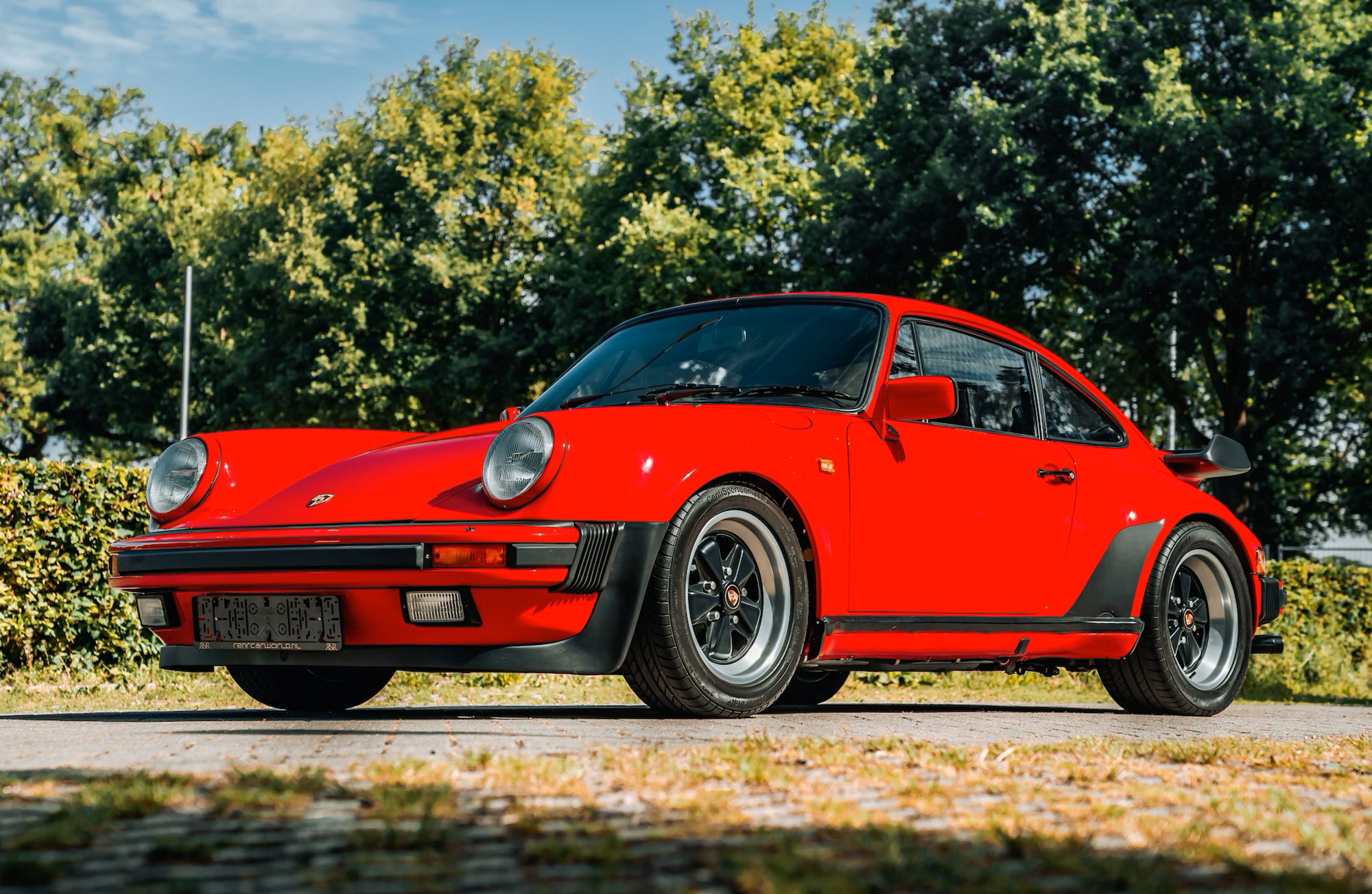
The Porsche 911 Turbo, known internally as the type 930 , is more than just a car. It is a legend, a symbol of the unrestrained power delivery of the 1970s and 1980s, and a milestone in the history of sports cars. With its brutal turbocharged engine, its iconic flared wings and its enormous rear wing, it embodies an era in which driving pleasure was still unfiltered and demanding.

Owning a 930 Turbo is without doubt a statement, and for many enthusiasts the fulfilment of a long-held dream. But that fascination has its price, not only in the purchase but in the running. The technical complexity and the notorious turbo lag call for someone who knows what they are doing at the wheel and an expert to maintain it.

260 PS

The original Turbo 3.0, KKK turbocharger

300 PS

3.3L with a charge air cooler, 412 Nm

330 PS

With the factory power enhancement (WLS)

G50/50

Five-speed gearbox, 1989 only
The Turbo evolution

The two eras of the type 930

From the purist original Turbo to the fully developed 3.3-litre evolution.

The original Turbo 3.0

1974-1977 · 260 PS · a collector focus

  • Engine: types 930/50 to 930/54, based on the Carrera RS 3.0 case
  • No charge air cooler, mechanical K-Jetronic
  • KKK turbocharger (3LDZ)
  • Purist, rare and, thanks to the small numbers, extremely valuable

The 3.3L evolution

1978-1989 · 300 PS · with a charge air cooler

  • The innovation: charge air cooling, to lower the intake temperature
  • A jump in power to 300 PS (up to 330 PS with the factory enhancement)
  • Buying tip: model year 1989 with the five-speed G50/50 gearbox counts as the most usable variant of the whole series and the one that holds its value best
In-depth analysis

Engineering, servicing and weak points

Click the categories to see the full details of the buyer's guide.

1. Engine and drivetrain: the heart of the car +

The combination of a robust six-cylinder flat engine and pioneering turbocharging gave the 930 a power delivery that was as fascinating as it was demanding.

The 3.0-litre turbo engine (the original Turbo):

  • Compression reduced to 6.5:1 to avoid knocking
  • A single KKK turbocharger (type 3LDZ) delivers 260 PS at 5,500 rpm
  • Fuel metering by Bosch K-Jetronic

The 3.3-litre turbo engine (the evolution from 1978):

  • The charge air cooler arrives, for 300 PS and 412 Nm
  • The factory power enhancement (WLS) to as much as 330 PS was possible

Typical weak points on the engine:

  • Oil leaks: check the cam covers, crankshaft seals, oil lines and timing case seals
  • Head studs: broken or pulled cylinder head fixings mean a complete engine strip-down
  • Turbocharger: watch for blue smoke (oil burning in the turbocharger), a whistling noise or a loss of power
  • K-Jetronic: faults in the fuel distributor, the warm-up regulator or the injectors cause rough running or starting problems
  • Heat exchangers and exhaust: prone to corrosion. Rust-through can let exhaust gas into the cabin
  • Valve clearances: neglect leads to a loss of power and to valve damage
  • Wastegate: a tired spring gives the wrong boost pressure

Gearbox and clutch:

  • Four-speed manual: very robust, but the synchromesh rings wear at high mileages
  • G50/50 five-speed (1989 only): coveted for its better ratios and usability
  • Clutch: Heavily loaded by the high torque. Setting the omega spring calls for expertise
2. Suspension, steering and brakes +

The wide track and the specific set-up deliver high stability through corners, but they make the Turbo demanding at the limit. The abrupt arrival of boost after the turbo lag can cause sudden oversteer.

Suspension check:

  • Dampers: worn Bilstein dampers make the car feel vague
  • Bushes and mounts: the rubber parts age and cause knocking noises and imprecise handling
  • Wheel bearings: listen for a grinding noise through corners
  • Modifications: lowering or coilover kits should be properly documented

Steering: Rack-and-pinion steering without power assistance. Check the track rod ends, the inner joints and the steering damper for play and for any restlessness.

Brakes (a motorsport inheritance):

  • Derived from the 917: ventilated discs all round for enormous stopping power
  • Callipers: the ATE or Brembo callipers can seize when a car stands. An overhaul is costly
  • Fluid: change it every two years to avoid corrosion in the system
3. Authenticity and originality: holding the value +

A faithfully original car with matching numbers is the decisive factor in holding value and in investment potential.

The DNA check:

  • VIN check: compare the number on the body (luggage compartment, A-pillar) with the paperwork. Rule out tampering
  • Matching numbers: The engine number (on the case) and the gearbox number must match the delivery records
  • Paint and specification: check the colour code (service book, luggage compartment). Verify options (air conditioning, sunroof) against the option codes
  • Certificate of authenticity / Kardex: a certificate of authenticity from Porsche, or a Kardex extract, is indispensable in confirming how the car left the factory

Recognising conversions:

  • Body: slant-nose conversions carried out later reduce the value considerably compared with the factory original (M505/M506)
  • Tuning: power upgrades (a different turbocharger, a different charge air cooler) should be reversible and documented
  • History: An original stamped service book and invoices from Porsche specialists are worth their weight in gold
4. The definitive checklist for the viewing +

Body and exterior:

  • Check the panel gaps (a clean accident record?)
  • Measure the paint thickness (body filler?)
  • Corrosion check: headlight bowls, the ends of the sills, window frames, the battery box, the area around the fuel filler
  • Targa and cabriolet seals: cracks, brittleness, whether they still seal

Interior and electrics:

  • Wear on the seat bolsters and cracks in the dashboard
  • That every instrument works (the boost gauge in particular)
  • Electrical conveniences: windows, sunroof, air conditioning, the hood mechanism
  • The smell test: damp or smoke?

Technical check (cold start):

  • Leaks in the engine bay (hoses, lines)
  • Cold start: any smoke? (blue means oil, black means too rich)
  • Noises: knocking, rattling or squealing?
  • The arrival of boost: it should be noticeable, but not uncontrollably brutal
The 930 Turbo model bible

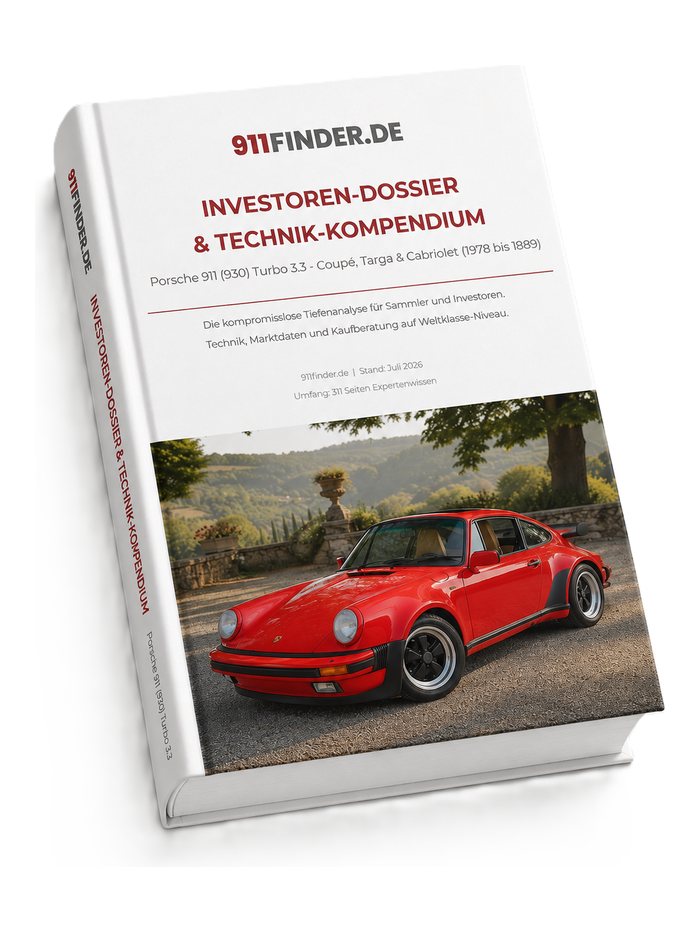
The complete knowledge: the Investor Dossier & Technical Compendium, in German

Concentrated expert knowledge on the 930 Turbo: detailed weak points, engine codes, inspection checklists, marks of originality, value-enhancing options and price forecasts.

€97

incl. VAT

To the compendium (German)
Estimates, as of 2026

Investment planning: repair costs

Estimates for running a high-performance icon.

Engine and ancillaries

Job / componentEstimated costRisk / note
A complete engine rebuild€15,000 - €30,000+Extremely high
Turbocharger overhaul/replacement€1,500 - €4,000Depending on the type of turbocharger
Clutch replacement (removal included)€2,000 - €4,500Heavily loaded
Bosch K-Jetronic overhaul€500 - €2,000+Specialist knowledge required

Gearbox and suspension

Job / componentEstimated costRisk / note
Gearbox overhaul (four-speed/G50)€3,500 - €7,000+Synchromesh rings/bearings
Set of dampers (Bilstein)€1,000 - €2,000Alignment included

Body and paint

Job / componentEstimated costRisk / note
Complete respray (high end)€10,000 - €20,000+Original quality
New hood (cabriolet)€1,500 - €3,500Fitting included

A note on servicing: A major service including the valve clearances costs around €1,000 - €2,500. Set aside several thousand euros a year.

Market analysis and investment rating, as of 2026

Price ranges (condition grade 2)

ModelPriceNote
930 Turbo 3.0 (1975-77)€150,000 - €220,000Very rare, a purist collector's car
930 Turbo 3.3 Coupé€140,000 - €200,000G50 cars (1989) command a premium of 10-20%
930 Targa / cabriolet€160,000 - €250,000The rare body styles are more expensive
Factory slant nose (M505/506)€250,000 - €400,000+Absolute rarities for a collection

The strategic conclusion from 911Finder

A 930 Turbo is a challenge worth taking on. It is an investment in driving pleasure and in motoring history.

Condition before mileage: An honest car with a history is better than a low-mileage car that has suffered from standing. The cost of an engine rebuild (around €25,000) often exceeds what you can save on the purchase price.

Pre-purchase inspection: On an investment of this size, a leak-down test and a borescope inspection by a Turbo specialist are the only sensible course.

The next step

Buy this 911 with confidence, with 911Finder.

Already own a Porsche 911 Turbo (type 930)? The Vehicle Documentation & Market Valuation puts the history, the paperwork and the market value of your car in order (€249 incl. VAT). Still looking? Then the right route is the Sourcing Enquire and name the model: Request a Digital Audit for a Porsche 911 Turbo (type 930).