911FINDER
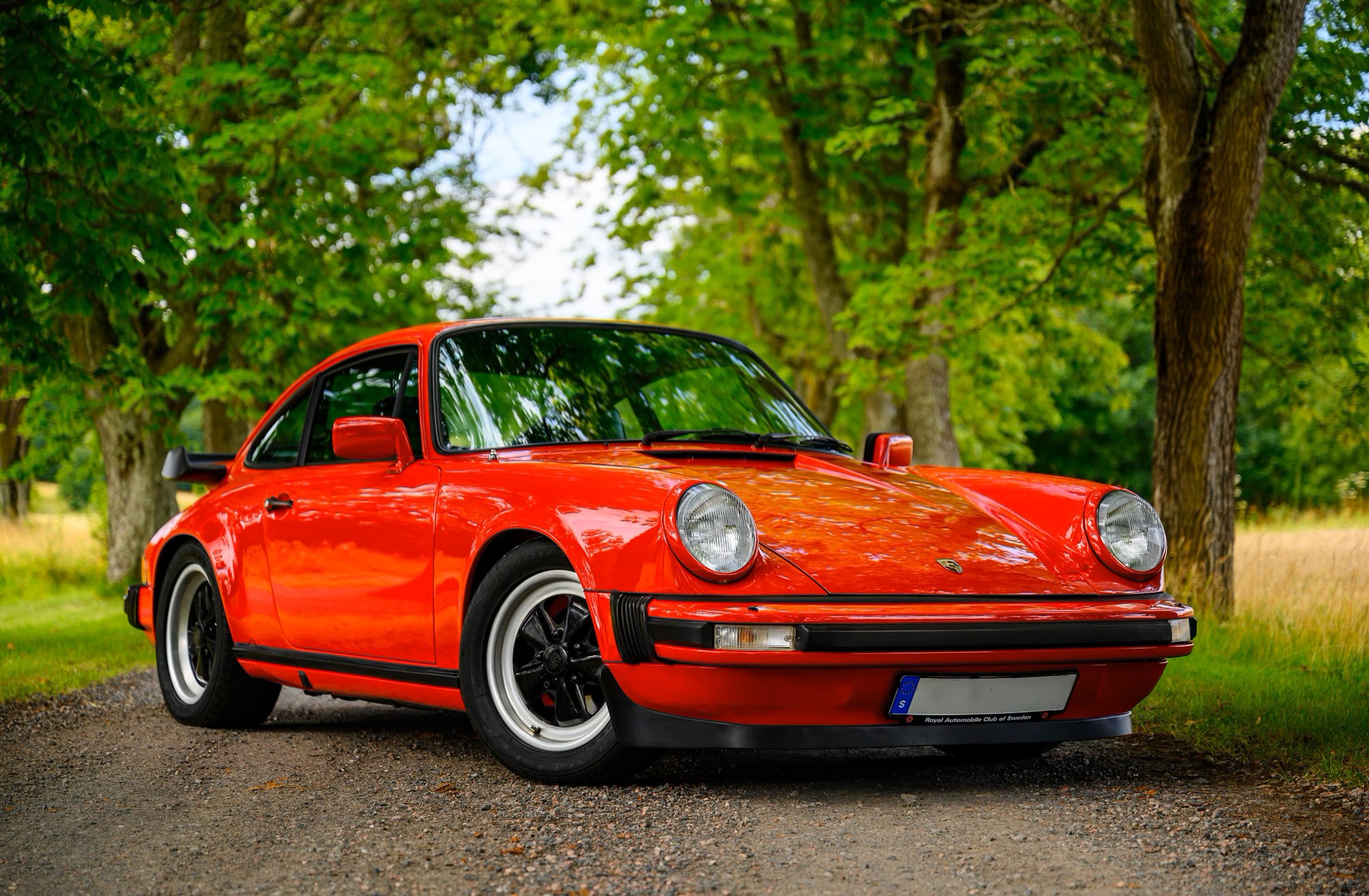
Porsche 911 Carrera 3.2

Home/Buyer's Guides/G-Series Carrera 3.2

The high point of the G-Series · 1983-1989

Porsche 911 Carrera 3.2 Buyer's Guide

The fully developed G-Series generation: a checklist for corrosion, engine, gearbox, history, originality, costs and market prices. So you can recognise a good car and avoid buying the wrong one.

Model variants Weak points Repair costs Market analysis Expert advice
The end of an era

The safest choice in the G-Series segment

The Carrera 3.2 represents the last and most fully developed stage of the classic G-Series. It embodies the end of an era, before the 964 took the stage. This late period combines timeless design with technical maturity and, for many enthusiasts, represents the absolute high point of the air-cooled classics.

With its characteristic silhouette, its perfect balance of classic feel and everyday reliability, and as much as 231 PS it meets every expectation of a true Porsche. Whether as a collector's car or as one to enjoy: the 3.2 is the safest choice in the G-Series segment.

231 PS

3.2-litre flat six without a catalytic converter

6.1 s

0 to 100 km/h

245 km/h

Top speed

G50

Getrag gearbox from 1987

Model variants and particularities

From the 915 gearbox to the G50

The evolution from the 915 gearbox to the modern G50 shift pattern.

Carrera 3.2 (1984-1986)

€50,000 - €70,000

  • Engine: type 930/20 (231 PS without a catalytic converter)
  • Gearbox: the 915 five-speed with a cable clutch
  • Character: a retro feel from the lighter but notchier shift
  • Performance: 0-100 km/h in 6.1 s, top speed 245 km/h

Carrera 3.2 (1987-1989)

€60,000 - €85,000

  • The upgrade: the G50 Getrag gearbox with a hydraulic clutch
  • Character: a considerably more precise shift, reverse forward and to the left
  • Buying tip: model year 1989 is particularly coveted (the last hand-built cars in Werk II)

Cars with a catalytic converter

€55,000 - €80,000

  • Variants: 930/21 (207 PS) or 930/25 (217 PS)
  • Engineering: lower compression (9.5:1) for unleaded fuel
  • Feel: they seem a little strangled at the top of the rev range

Body styles and special models

Coupé · Targa · Cabriolet

  • Coupé (the most popular), Targa (a removable roof panel), Cabriolet (an electric hood)
  • Clubsport (M637, lightweight)
  • Speedster (1989, extremely rare)
  • Turbo-look (M491, a Carrera with the wide Turbo body)
  • The anniversary model "25 Jahre 911"
Detailed analysis

Weak points and inspection guide

Click the categories for the full expert assessment.

1. Body and exterior +

Although the body was fully galvanised, it is not immune to corrosion today. Cars with deferred maintenance or winter use in particular show corrosion.

Critical corrosion points:

  • The jacking points and sills
  • The underbody (the area of the rear seat wells)
  • Wing edges (the front wheel arches) and the area around the fuel tank
  • The A-pillar and the windscreen frame
  • Targa-specific: the join between the Targa bar and the rear wing

Seals and hood:

  • Brittle door seals let water in
  • Cabriolet: worn hood seals and bearings
  • Targa: leaking seals at the roof panel
  • Cracks in the bumper bellows
Inspection tip: Use a lift. Watch for untidy repairs or thick underseal that could be hiding rust-through.
2. Engine: the 3.2L heart of the car +

Regarded as one of the most robust engines of all (an aluminium alloy case). The DME with Bosch L-Jetronic replaced the old K-Jetronic.

Typical weak points:

  • Oil leaks at the cam covers and the oil return tubes
  • Increased oil consumption from worn valve guides (from around 150,000-200,000 km)
  • Rough running in damp weather (brittle ignition leads, a faulty distributor cap)
  • Important: The valve clearances have to be checked every 20,000 km. Neglect leads to expensive damage
Recommendation: Use a quality 10W-60 oil and listen on a cold start for knocking (bearing damage). Split oil return tubes make a simple repair possible without removing the engine.
3. Gearbox and drive (915 vs G50) +

915 gearbox (to 1986):

  • A cable clutch (heavy)
  • The synchromesh rings in second and third are often worn (a crunch)
  • A lightweight advantage: the engine feels more eager to rev

G50 gearbox (from 1987):

  • A hydraulic clutch (light)
  • Borg-Warner synchromesh (more precise)
  • More future-proof, but around 12 kg heavier
Maintenance: A gearbox oil change every 40,000 - 60,000 km. On the 915, the shift rod bushes are often brittle (an imprecise shift).
4. Suspension, brakes and steering +

Suspension:

  • Worn bushes on the rear torsion bars
  • Vague handling from old dampers
  • Recommendation: convert to Turbo tie rods for more precision

Brakes and steering:

  • Sticking brake pistons on cars that stand around
  • No power assistance: heavy at a standstill, direct on the move
  • Worn universal joints in the steering column can cause play
5. Electrics and interior +

Electrics:

  • Faulty alternators and voltage regulators
  • DME control unit dropouts caused by dry solder joints
  • Check that the window and seat adjustment motors work

Interior:

  • Cracks in the dashboard (sunlight)
  • Wear on the seat bolsters (where you get in)
  • Adds value: Original sports seats, working air conditioning and the original Blaupunkt radio
The Carrera 3.2 model bible

The complete knowledge: the Investor Dossier & Technical Compendium, in German

Concentrated expert knowledge on the Carrera 3.2: detailed weak points, inspection checklists, marks of originality, value-enhancing options and price forecasts.

€97

incl. VAT

To the compendium (German)
Average figures from specialist workshops, as of 2025

Budget: typical repair costs

Engine & drivetrain

Job / componentEstimated costInterval / note
A complete engine rebuild€15,000 - €25,000Depending on mileage and wear
Adjust the valve clearances€400 - €800Every 20,000 km
DME control unit (reconditioned)€800 - €1,500With starting problems
Gearbox overhaul (915)€4,000 - €7,000Synchromesh rings included
Gearbox overhaul (G50)€5,000 - €8,000Needed less often

Body and interior

Job / componentEstimated costInterval / note
Replace a sill (per side)€2,000 - €4,000Where it has rusted through
Renew the hood (Cabriolet)€2,500 - €4,000Fabric and fitting
Renew the dashboard€2,500 - €4,500An involved replacement

Annual servicing budget: Allow around €1,500 - €3,000 for running costs.

Market analysis, as at May 2025

Market analysis and price development

The Carrera 3.2 shows a steady rise in value across every body style.

ModelPrice (condition grade 2)
Coupé (G50 gearbox)€65,000 - €80,000+
Coupé (915 gearbox)€55,000 - €70,000
Targa (G50 gearbox)€65,000 - €80,000
Cabriolet (G50 gearbox)€70,000 - €85,000
Speedster (1989)€180,000 - €220,000+

Expert advice from 911Finder

The best choice: A late car (1987-89) with the G50 gearbox offers the greatest everyday usability and the best value retention.

Matching numbers: Always check that the engine and chassis numbers agree. On this model, original condition is worth more than cosmetic improvements.

The next step

Buy this 911 with confidence, with 911Finder.

Already own a Porsche 911 Carrera 3.2? The Vehicle Documentation & Market Valuation puts the history, the paperwork and the market value of your car in order (€249 incl. VAT). Still looking? Then the right route is the Sourcing Enquire and name the model: Request a Digital Audit for a Porsche 911 Carrera 3.2.