911FINDER
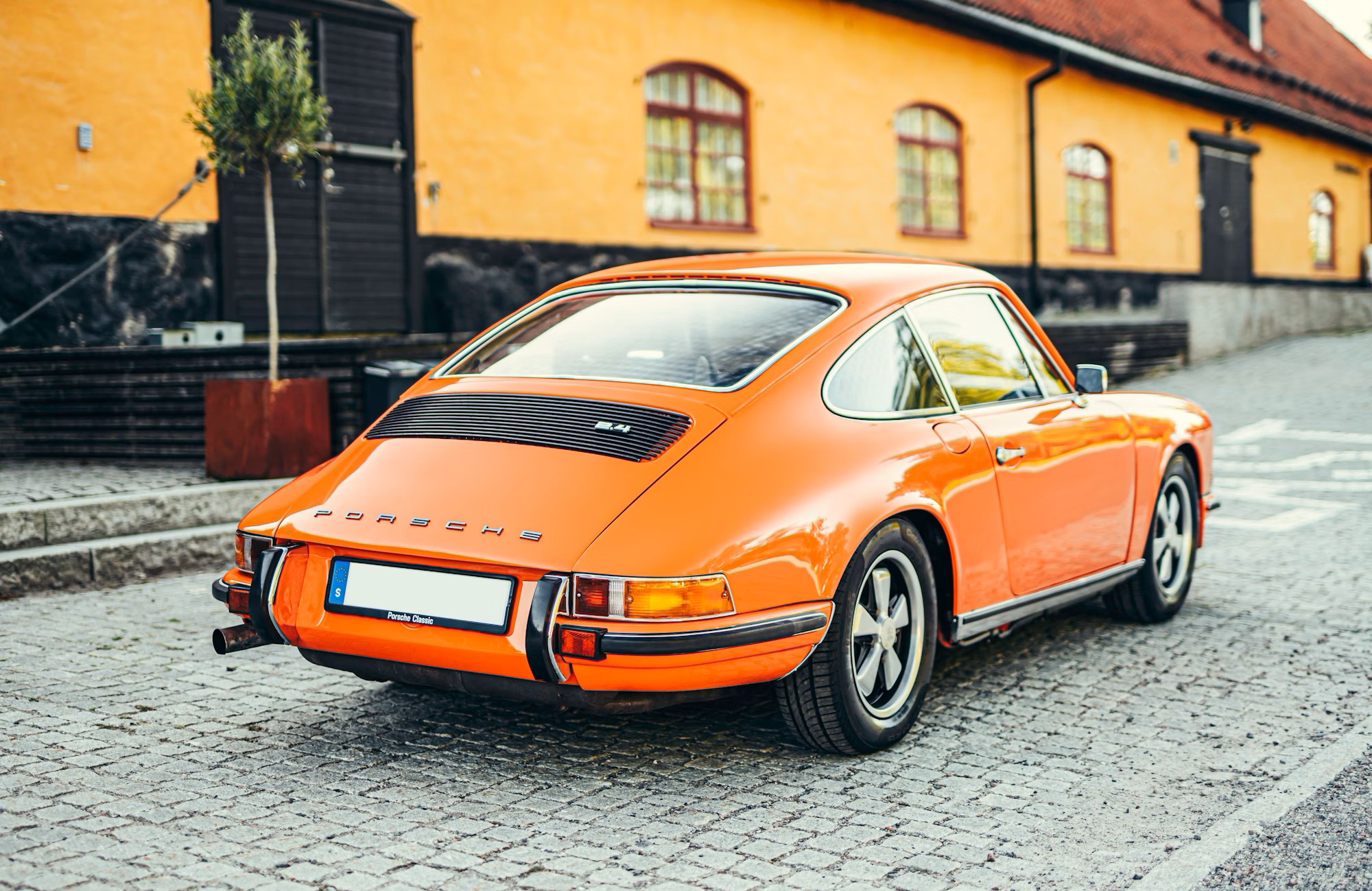
Porsche 911 long-hood Ölklappe, model year 1972

Home/Buyer's Guides/911 long-hood Ölklappe

The one-year-only car · 1972

Porsche 911 Long-Hood „Ölklappe“ Buyer's Guide

The exclusive icon of model year 1972: originality, the details of the oil flap, corrosion areas, matching numbers, history and price level. So you avoid a bad investment.

The 2.4-litre cars Engineering and the oil flap Cost overview Market values Conclusion and warning
The special position of model year 1972

The exclusive icon

The Porsche 911 of model year 1972 holds a special position. It is the only year in which the oil filler neck sat behind a flap on the right-hand B-pillar, a detail that gave rise to the nickname „Ölklappenmodell“, the oil-flap car .

This design decision, made to optimise weight distribution, was dropped after a single year because of the risk of confusion with the fuel tank. That very short life and the small numbers (around 10,000 cars) make these cars extremely coveted collector's pieces today.

This buyer's guide sets out the specific features, the weak points and the market for this rare species. The aim is to equip you to avoid a bad investment in this high-priced classic.

2.4 L

Displacement of every 1972 car

130-190 PS

From the T to the S

1 Year

Model year 1972 only
~10,000

Cars built

The variants of 1972

The 2.4-litre cars

Every car received the engine enlarged to 2.4 litres and the new type 915 gearbox.

911 T 2.4 (Ölklappe)

130 PS · carburettors

  • Engine: 2.4-litre flat six with Zenith carburettors (some US cars with MFI)
  • Character: the entry model, but very harmonious thanks to the 2.4 litres and the 915 gearbox
  • Often less generously equipped, but appealing in its purism

911 E 2.4 (Ölklappe)

165 PS · MFI

  • Engine: 2.4-litre flat six with mechanical fuel injection (MFI)
  • Character: the comfortable grand tourer, flexible and strong
  • Often with hydropneumatic front suspension (usually converted today)

911 S 2.4 (Ölklappe)

190 PS · MFI

  • Engine: 2.4-litre flat six with MFI, laid out to rev
  • Character: the top model, with a firm suspension set-up and often a front spoiler
  • Today the most expensive and most sought-after variant
Specialist knowledge

Detailed analysis: engineering and the oil flap

Click the sections to read the full information.

1. The oil flap: function, myth and forgery +

Function: The flap on the right-hand B-pillar served to fill the dry-sump oil tank, which was placed in the right rear wing for better weight distribution.

The problem: It resembled the fuel filler flap. Careless attendants put petrol into the oil tank, and the result was a destroyed engine. That is why the solution was dropped again in 1973.

Authenticity check:

  • Is the flap original? Retrofits can be recognised by untidy welds or by the texture of the paint
  • Compare the chassis number (VIN) with the production records. There are forgeries built on other model years.
2. Body: the special detail and its pitfalls +

The body corresponds to the long-wheelbase long-hood 911, but the oil flap gives it a unique selling point. Corrosion is the main enemy.

  • The area of the oil flap: check the metal around the flap and the oil tank behind it for corrosion. The mechanism must be intact (original parts are scarce)
  • Battery boxes: two batteries were often fitted at the front; check for acid damage
  • Sills and floor panels: corrosion spreading from the inside out. Lift the carpets.
  • Wings and headlight bowls: the classic weak points
  • Targa: check the seals and the roll bar
Tip: use a magnet to find accident damage or corrosion repairs filled with body filler. Watch the panel gaps.
3. Engine: the 2.4-litre magnesium heart and MFI +

Some of the 2.4-litre engines (2,341 cc) used die-cast magnesium for the crankcase. Lighter, but more prone to corrosion and distortion.

  • Magnesium case: cracks or pulled cylinder head studs are serious, expensive damage (case repair: €3,000-€8,000)
  • Oil leaks: Seals, oil return tubes (resealing: €500-€3,000)
  • Chain tensioner: Conversion to the hydraulic Carrera tensioners is recommended (cost: €800-€1,500)
  • MFI (E and S): the Bosch injection system is complex. Worn pumps or throttle bodies cause poor running (pump overhaul: €1,500-€3,500)
  • Heat exchangers: often rusted through (a smell of exhaust). Stainless steel is recommended
4. Gearbox: the new type 915 +

With model year 1972, the type 915 gearbox was introduced. It replaced the 901.

  • H-pattern: first gear forward and to the left (instead of the dog-leg of the 901)
  • More robust: laid out for the higher torque of the 2.4-litre engines
  • Shift quality: a little notchy when cold (normal). A crunch on the shift points to worn synchromesh rings (second and third). Overhaul: €2,500-€5,000
  • Shift linkage: the bushes develop play and the shift becomes imprecise
5. Suspension and brakes: agile and direct +

Agile handling, but maintenance is essential for safety.

  • Rubber bushes: they age and make the car feel vague. Replacing them is involved (a set: €300-€800 plus expensive fitting)
  • Dampers: a wear part (Bilstein/Koni)
  • Hydropneumatic suspension (911 E): optional. The system is complex and expensive, and is often converted to conventional springs
  • Brakes: seized callipers after standing, corroded lines
  • Wheels: original Fuchs wheels (check their condition)
6. Electrics and interior: the spirit of the age +

Electrics:

  • The wiring looms become brittle
  • Long-wheelbase specific: two batteries at the front; check the body for acid damage
  • Instruments and alternator: failures due to age

Interior:

  • The dashboard often cracks in the sun (repair: €500-€2,000)
  • Seats: sagged or worn. Original coverings (houndstooth or corduroy) are valuable
  • Door trims: they warp with damp (check the moisture barriers)
The 911 Ölklappe model bible

The complete knowledge: the Investor Dossier & Technical Compendium, in German

Concentrated expert knowledge on the Porsche 911 long-hood „Ölklappe“: detailed weak points, criteria for authenticity, inspection checklists, details of originality and a classification of prices.

€97

incl. VAT

To the compendium (German)
Estimates for 2025

Cost overview

The 1972 car has its own cost items, the magnesium case among them.

Engine (magnesium)

Work / componentScopeEstimated cost
Magnesium case repairFor cracks or head studs€3,000 - €8,000
A complete engine rebuildComprehensive€12,000 - €25,000+
MFI system (pump/setting up)E and S cars€1,500 - €3,500
Resealing oil leaksSeals and so on€200 - €3,000

Drivetrain and body

Work / componentScopeEstimated cost
Gearbox overhaul (type 915)Synchromesh rings/bearings€2,500 - €5,000
Complete body restorationDepending on the substance€20,000 - €50,000+
Oil flap mechanism/partsOriginal partsHard to source / expensive
Market values, as at May 2025

Market values and conclusion

The oil-flap car is one of the most coveted long-hood 911s of all.

ModelBase (condition grades 2-3)Top (condition grade 1)
911 T 2.4 (Ölklappe)€85,000 - €100,000€110,000 - €150,000+
911 E 2.4 (Ölklappe)€110,000 - €130,000€140,000 - €200,000+
911 S 2.4 (Ölklappe)€160,000 - €180,000 (very rare)€270,000 - €320,000+

An oil-flap 911 is an investment-grade asset. Its uniqueness, built for one year only, guarantees that it holds its value.

Conclusion and warning from 911Finder

Risk: Forgeries (converted '73 cars) and hidden damage to the magnesium engine. Buying without an expert appraisal (matching numbers, the magnet test, a borescope inspection) is grossly negligent.

The next step

Buy this 911 with confidence, with 911Finder.

Do you already own a 911 from this model series? The Vehicle Documentation & Market Valuation puts the history, the paperwork and the market value of your car in order (€249 incl. VAT). Still looking? Then the right route is the Sourcing Enquire and name the model: Request a Digital Audit for a car from this model series.