911FINDER
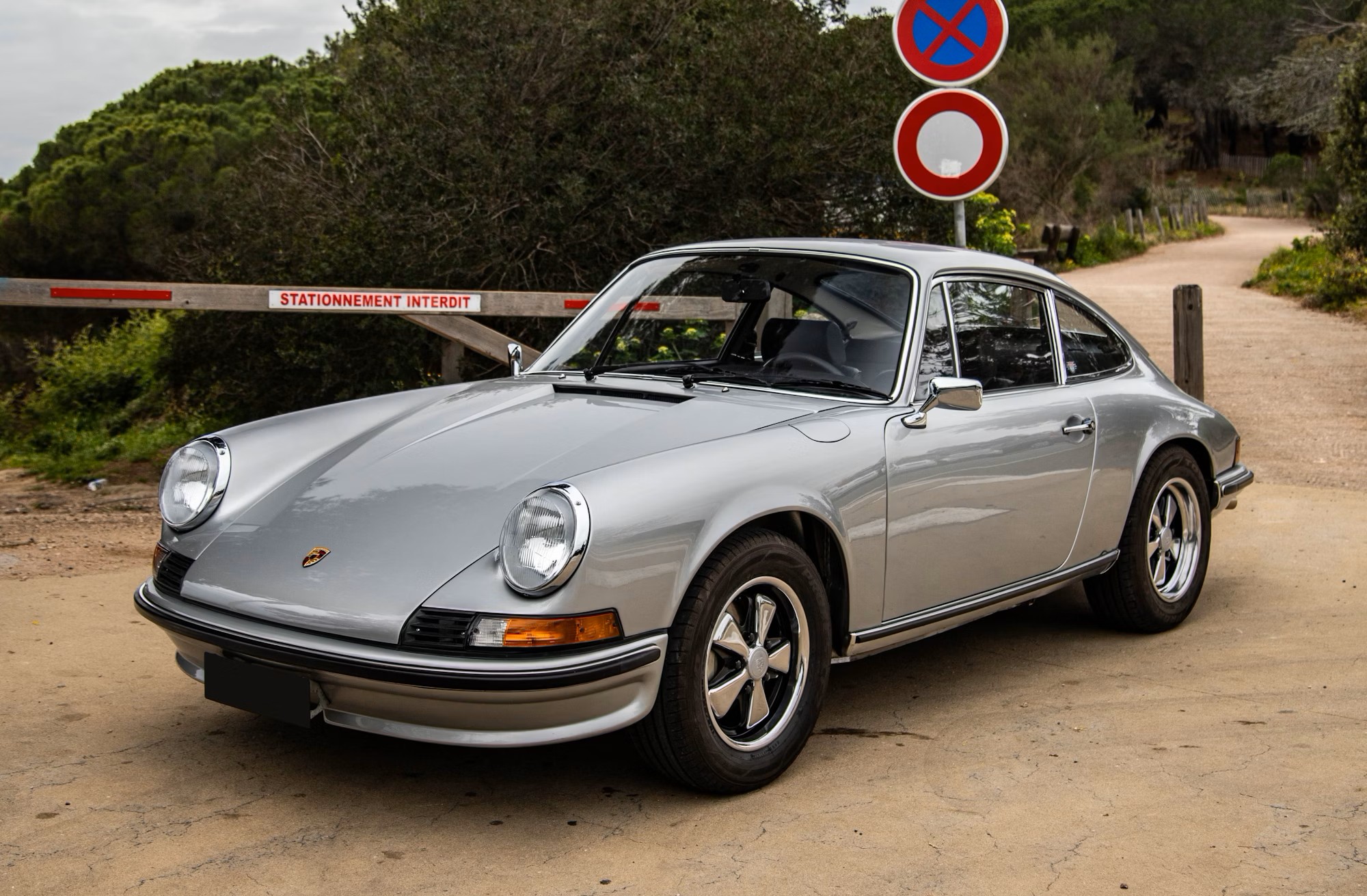
Porsche 911 long-hood of the second generation (LWB)

Home/Buyer's Guides/911 long-hood, 2nd generation

The era of change · 1969-1973

Porsche 911 Long-Hood 2nd Gen „LWB“ Buyer's Guide

A longer wheelbase, mechanical fuel injection, more displacement: originality, corrosion areas, oil leaks, history, prices and traps of the second long-hood generation.

The T, E and S model lines Weak points Cost overview Market values Conclusion & recommendation
The second generation, 1969-1973

The era of change

Welcome to our comprehensive buyer's guide to the fascinating, revised Porsche 911 long-hood cars built from 1969 to 1973. This era marks a decisive turning point in the evolution of the legendary 911. With the introduction of the longer wheelbase (LWB, long wheelbase) from model year 1969, Porsche took an important step towards optimising the handling and laid the foundation for the continuing success of the 911.

In the years up to 1973 the series saw significant further development, including the introduction of mechanical fuel injection (MFI) for the more powerful E and S cars, and successive increases in displacement that gave the cars still more composure and performance.

This generation of the Porsche 911, often called the long-hood or the second long-hood generation, combines the purist charm of the early cars with engineering that had already matured noticeably and with improved handling. From the agile 2.0-litre cars of model year 1969 to the torque-rich 2.4-litre cars of 1973, this period offers an exciting range of characters and power levels.

110-190 PS

From the T to the S

2.0-2.4 L

The evolution of displacement

LWB

A longer wheelbase from 1969

1969-73

Production, 2nd generation

The model lines

The hierarchy: T, E and S

The cars divide into three clear characters, each of which grew from 2.0 through 2.2 to 2.4 litres.

911 T (Touring)

The way in · 110-140 PS

  • Conceived as the entry model, a solid basis, usually with carburettors (except late US cars with MFI)
  • 1969 (2.0L): 110 PS, carburettors
  • 1970/71 (2.2L): 125 PS
  • 1972/73 (2.4L): 130 PS (carburettors) or 140 PS (MFI); the type 915 gearbox from here on

911 E (injection)

The middle · 140-165 PS

  • The more comfortable middle, chiefly through mechanical fuel injection (MFI); regarded as the most harmonious compromise
  • 1969 (2.0L): 140 PS, often with hydropneumatic suspension
  • 1970/71 (2.2L): 155 PS, a balance of sport and comfort
  • 1972/73 (2.4L): 165 PS, a composed sports car

911 S (Super)

The top · 170-190 PS

  • The sporting top model with MFI: eager to rev, strong and today the most valuable
  • 1969 (2.0L): 170 PS, the first choice for the ambitious
  • 1970/71 (2.2L): 180 PS, the sporting high point
  • 1972/73 (2.4L): 190 PS, impressive performance, often with a front spoiler
Specialist knowledge

Detailed analysis: engineering and weak points

Click the sections to read the full information.

1. Body: the foundation, with new challenges +

The body of the Porsche 911 long-hood cars from 1969 to 1973 forms the backbone of these classic sports cars. With the introduction of the longer wheelbase (LWB) from model year 1969, not only did the handling improve, but subtle changes to the body structure followed too.

Despite continuous improvements in the production process, the corrosion protection on these cars was not yet at the level of later generations, which makes a careful inspection indispensable.

  • Wings: vulnerable around the headlight bowls, the wheel arch edges and the inner closing panels
  • Sills: classic corrosion spots, often hidden under paint or underseal
  • Lower door edges: damp collects here and leads to rust-through
  • Battery boxes: long-wheelbase cars often have two batteries in the front luggage compartment. Acid and condensation cause corrosion
  • Window frames: corrosion from leaking seals often becomes visible only late
  • The area of the oil tank (1972): on the „Ölklappenmodell“ with the external oil filler, check this area particularly carefully
  • Floor panels and longitudinal members: an inspection from underneath is indispensable
From model year 1970/71, Porsche began partial galvanising (the floor panels). Even so, no long-hood car of this era is free of corrosion, and old underseal can hide it. Watch too for uneven panel gaps and traces of panel beating (accident damage). The originality of the fittings (lights, trim) plays a large part in the value.
2. Engine: the heart of the car, with MFI and displacement +

On the revised long-hood cars the engine saw significant development (2.0 to 2.2 to 2.4 litres). One important change was the introduction of magnesium crankcases from the end of 1968. These are lighter, but more prone to corrosion and distortion (pulled head studs).

  • Oil leaks: crankshaft seals, pushrod tube seals, cam covers (cost: €500-€3,000)
  • Chain tensioner: the mechanical tensioners tend to fail (conversion: €500-€1,500)
  • Valve guides: wear leads to oil burning (overhaul: €2,000-€5,000)

Mechanical fuel injection (MFI): a technical highlight on the E and S cars. It gives an immediate throttle response, but it is complex. Problems: worn throttle shafts, an injection pump out of adjustment (the three-dimensional space cam), the warm-up regulator (MFI repair: €500-€4,000).

Carburettors (911 T): easier to service, but also prone to poor setting up or air leaks (cost: €500-€2,000).

A warning on costs: a complete engine rebuild (including machining the case) can quickly reach €15,000 to more than €30,000.
3. Gearbox: from the type 901 to the type 915 +

The transmission is decisive. In this period there was an important change.

  • Type 901/911 (to 1971): used in the 2.0L and 2.2L cars. The characteristic dog-leg shift pattern (first gear back and to the left). Precise, but the synchromesh rings (first and second) often wear (overhaul: €2,500-€6,000)
  • Type 915 (from 1972): introduced with the 2.4L cars. A conventional H-pattern, more robust for the higher torque
  • Sportomatic: a rare semi-automatic (four speeds, no clutch pedal). Servicing is involved and expensive, because parts are scarce
  • Clutch: a wear part (€1,000-€2,500). Check the driveshafts for play too
4. Suspension and brakes: evolution for control +

The longer wheelbase (LWB) from 1969 noticeably increased stability. There are still points to watch.

Hydropneumatic suspension (911 E): optional on the E to 1971, for self-levelling and comfort. The system is complex and expensive, and many cars have been converted to conventional dampers.

  • Dampers and rubber bushes: wear makes the car feel vague (replacement: €600-€2,000)
  • Steering: play points to the track rod ends or the steering box
  • Brakes: ventilated discs on the S (and often on the E). Seized callipers are common after a car has stood (overhaul per axle: €500-€1,500)
  • Wheels: original Fuchs wheels are very valuable
5. Electrics and interior: a time capsule with pitfalls +

Electrics: problems due to age are common.

  • Corrosion on the fuse boxes and connectors
  • The wiring looms become brittle (a short-circuit risk). Renewal costs €1,500-€5,000 plus fitting
  • Long-wheelbase cars often have two batteries at the front (check for acid damage)

Interior: originality determines the value.

  • Dashboard: often cracks through UV exposure (repair: €500-€1,500)
  • Seats: worn coverings and padding. Retrimming: €500-€2,000 per seat
  • Carpets/headlining: often musty from damp
The 911 long-hood LWB model bible

The complete knowledge: the Investor Dossier & Technical Compendium, in German

Concentrated expert knowledge on the Porsche 911 long-hood of the second generation (LWB): detailed weak points, inspection checklists, criteria for originality, details that add value and a classification of prices.

€97

incl. VAT

To the compendium (German)
Estimates for 2025

Cost overview

Realistic prices for work at specialist workshops.

Engine and gearbox

Work / componentScopeEstimated cost
Engine resealing (gaskets)Partial overhaul€5,000 - €15,000
A complete engine rebuildComprehensive€15,000 - €30,000+
MFI system overhaulFuel injection€500 - €4,000
Gearbox overhaul901 or 915€2,500 - €6,000

Body and interior

Work / componentScopeEstimated cost
Minor corrosion repairsLocalSeveral thousand euros
Complete restorationBody€20,000 - €50,000+
Renew the wiring loomParts + fitting€1,500 - €5,000+
DashboardCrack repair/new€500 - €1,500
Market values, as at May 2025

Market values and conclusion

ModelCondition grades 3-2Top condition
911 T 2.2/2.4€100,000 - €150,000more than €160,000
911 E 2.2/2.4€120,000 - €180,000more than €220,000 (rare)
911 S 2.2/2.4€180,000 - €250,000€300,000 - €350,000 and more (top collector cars)

Prices vary greatly by originality (matching numbers) and condition. Targa cars are often 10-20% cheaper.

Conclusion and recommendation from 911Finder

The long-wheelbase 911 is an icon. But the cost of restoration (body, MFI, magnesium engine) can exceed the purchase price. Important: At these prices, a professional pre-purchase inspection (borescope, matching-numbers check, the magnet test) is the only sensible course.

The next step

Buy this 911 with confidence, with 911Finder.

Do you already own a 911 from this model series? The Vehicle Documentation & Market Valuation puts the history, the paperwork and the market value of your car in order (€249 incl. VAT). Still looking? Then the right route is the Sourcing Enquire and name the model: Request a Digital Audit for a car from this model series.